Wax and Witness: The Artisans Keeping Colonial Candlemaking Alive in a World of Switches
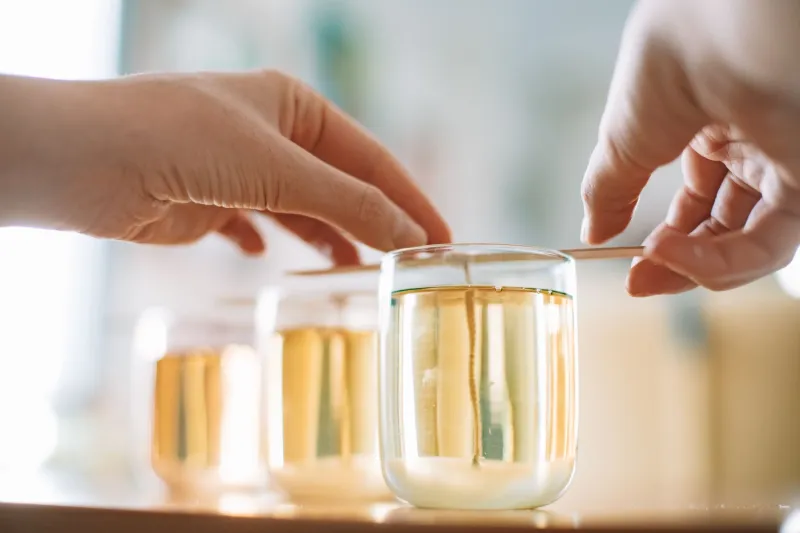
There is something almost ceremonial about the moment a hand-dipped taper is lifted from the cooling rack — pale, slightly irregular, smelling faintly of beeswax and effort. It is an object that took perhaps forty passes through a vat of heated wax to achieve its slender form. It will burn for a few hours and leave nothing but a curl of smoke and a memory. To the growing community of volunteer candlemakers working across living-history museums, heritage farms, and private workshops from Massachusetts to the Carolinas, that impermanence is precisely the point.
A Craft That Once Ran the Country
To understand why these practitioners labor over methods that the modern world abandoned long ago, it helps to appreciate how central candlemaking once was to American economic and domestic life. In colonial households, candle production was not a hobby but a seasonal obligation — a multi-day autumn undertaking in which entire families rendered tallow from slaughtered livestock, poured it into molds, or drew wicks repeatedly through liquefied fat until the tapers reached usable thickness. Beeswax candles, far more expensive, were reserved for churches, prosperous merchants, and the occasional formal occasion. The quality of a household's candles said something about its standing.
Beyond the domestic hearth, candlemaking supported an entire commercial ecosystem. Colonial chandlers ranked among the more prosperous tradespeople in port cities; the export of spermaceti candles — made from the waxy substance found in sperm whale heads — was so lucrative that it generated one of the earliest industrial monopolies in pre-Revolutionary America. When the Continental Congress debated economic self-sufficiency, candle production was part of the conversation. Light, in other words, was politics.
The Labor Behind the Light
Susan Whitmore has been demonstrating colonial candlemaking at a living-history site in central Virginia for eleven years. On a cool October morning, she tends a pair of iron kettles suspended over a low fire, one holding rendered beef tallow, the other a blend of tallow and bayberry wax. A row of paired wicks, looped over wooden dowels, hangs from a simple rack above the cooling table.
"People always expect it to be faster," she says, drawing a set of wicks through the tallow with a practiced, unhurried motion. "They think I'll dip once and it'll be done. But each pass only adds maybe a sixteenth of an inch. You have to let the wax cool between dips, or you'll pull off what you just laid down. Patience isn't a virtue here — it's a technique."
That rhythm — dip, lift, wait, dip again — is the material reality that separates authentic colonial candlemaking from the decorative hobby it is sometimes mistaken for. Practitioners like Whitmore are meticulous about sourcing: genuine beeswax from regional apiaries, tallow rendered from heritage-breed animals rather than commercial processors, cotton wicks twisted by hand rather than purchased pre-braided. The distinctions matter not as affectation but as historical fidelity. A candle made from commodity paraffin with a zinc-core wick is not a colonial candle. It is a contemporary object wearing period costume.
Molds, Pours, and the Question of Authenticity
Not all colonial candlemaking relied on the dipping method. Pewter molds — long, slender tubes arranged in clusters of six, eight, or twelve — allowed for a more controlled pour and a more uniform product. The mold candle was the small-batch production method of its era, and a number of today's heritage practitioners have made its revival their particular specialty.
At a restored farmstead in western Pennsylvania, volunteer chandler Marcus Delray spends several weekends each year demonstrating the mold-pour process for school groups and heritage tourists. He works with a set of reproduction pewter molds cast from eighteenth-century originals held in a Philadelphia collection. "Pewter conducts heat differently than modern metal," he explains. "It affects how quickly the wax sets, which affects the texture of the finished candle. You can see the difference. You can feel it."
Delray's insistence on material authenticity extends to the wicks, which he twists himself from unbleached cotton fiber. The twist direction matters: colonial chandlers understood empirically, if not chemically, that a properly twisted wick curls as it burns, moving the tip into the hottest part of the flame and reducing the need for frequent trimming. It is a small engineering insight embedded in a simple gesture — the kind of embodied knowledge that disappears entirely when a craft is industrialized.
What Slow Making Teaches
The resurgence of interest in colonial candlemaking is part of a broader cultural reckoning with what is lost when the handmade gives way entirely to the manufactured. Heritage organizations across the United States have noted a marked increase in public programming around traditional crafts over the past decade — not merely as nostalgic performance, but as a form of material literacy. When visitors watch a chandler work, they are not simply observing a quaint demonstration. They are recalibrating their sense of what objects cost — in time, in skill, in attention.
"We live in a world where a candle costs two dollars at the checkout line," says Whitmore. "Nobody thinks about what went into it, because nothing really did — it came off a machine. But when you've stood here for three hours building a single taper, you understand why light was precious. You understand why people went to bed when the sun went down."
There is a pedagogical argument embedded in that observation — that the experience of making something slowly and carefully is itself a form of historical education, one that no textbook or documentary can fully replicate. The weight of a finished tallow candle in the hand, the faint animal smell of rendered fat, the slight irregularity of a hand-dipped surface: these are sensory data points that connect the present to the past in ways that language alone cannot manage.
Carrying the Flame Forward
The community of serious colonial candlemakers in the United States is not large. Estimates from living-history networks suggest that fewer than three hundred practitioners work with genuine period methods on any regular basis, and many of them are concentrated at a handful of well-resourced historic sites. Recruitment is a persistent challenge. The skills are not difficult to learn, but the commitment to authenticity — to sourcing, to process, to the long hours of repetitive labor — asks something of a person that casual interest cannot sustain.
Still, the community persists, and in some corners it is growing. Online forums and regional guilds have created networks where practitioners share sourcing information, debate historical methods, and mentor newcomers. Several living-history museums have introduced candlemaking apprenticeships specifically aimed at younger volunteers. The craft, it seems, retains its capacity to attract the genuinely devoted.
For those who practice it, the work is its own justification. Each finished candle is simultaneously an artifact, an argument, and an act of remembrance — a small, luminous insistence that the past is not merely something to be studied from a distance, but something that can still be held, lit, and allowed to burn.