Sentinels of the Night: The Devoted Custodians Guarding America's Historic Street Lighting
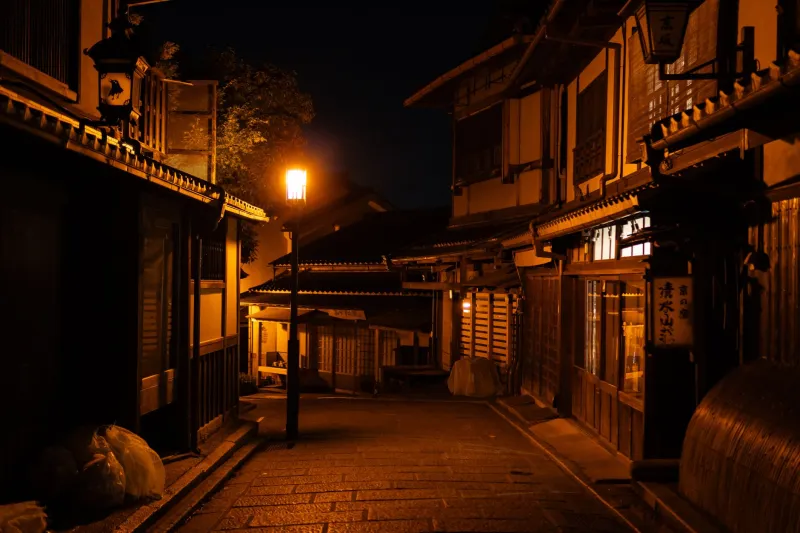
Long after the city quiets and the last pedestrian has turned toward home, a particular kind of guardian makes his rounds. Armed with a lighting rod, a maintenance log, and a knowledge of flame pressure that most engineers no longer bother to acquire, he moves from lamp to lamp along cobblestone streets that have not fundamentally changed since the Republic was young. He is, in the most literal sense, a keeper of the light—and he understands, with a conviction that borders on the devotional, that what he tends is far more than infrastructure.
America's historic street lighting represents one of the least celebrated and most endangered dimensions of its architectural heritage. From the gas lamps of Philadelphia's Society Hill to the fluted cast-iron standards of Savannah's oak-lined squares, from the terra-cotta clusters of New Orleans' Vieux Carré to the streamlined Art Deco globes that still preside over certain Chicago boulevards, these fixtures constitute a nocturnal architecture as deliberate and as expressive as anything built in daylight. And yet they exist in a perpetual state of institutional neglect, their survival dependent not on federal mandates or generous endowments, but on the stubborn affection of individuals who have chosen, often at considerable personal expense, to stand watch.
The Grammar of Gas
To understand why historic street lighting matters, one must first understand what it communicates. Every fixture in a historic district is a sentence in a larger architectural language—a language that speaks to the era of its installation, the aspirations of the municipality that commissioned it, and the craftsmen who fabricated it. The graceful swan-neck brackets of Boston's Beacon Hill, for instance, were designed not merely to dispel darkness but to confer dignity upon a neighborhood that considered itself, with some justification, the intellectual capital of the new nation. To replace them with standardized LED cobra-head fixtures would be, in the estimation of those who study such things, an act of erasure as consequential as demolishing a Federal-period townhouse.
Gas lamps present a particular preservation challenge. Unlike electric fixtures, which can be retrofitted or replicated with relative ease, functioning gas lamps require an active supply infrastructure—underground pipes, pressure regulators, and metered connections that many municipalities have quietly decommissioned over the past half-century. Where gas service has been severed, preservationists have occasionally succeeded in converting historic mantles to electric simulation, though purists regard such compromises with measured sorrow. The quality of light produced by an open gas flame—its warmth, its slight flicker, its tendency to render the human face in tones that no LED engineer has yet replicated—is, they argue, itself a form of historical information.
Municipal Stewardship and Its Discontents
The story of historic street lighting preservation is, in many municipalities, a story of bureaucratic attrition. Public works departments, operating under perpetual budget pressure, tend to regard non-standard fixtures as liabilities rather than assets. Replacement parts for nineteenth-century lamp posts are not stocked in municipal warehouses; skilled workers capable of servicing gas mantles or restoring ornamental ironwork are not produced by vocational training programs oriented toward contemporary infrastructure. The path of least resistance is replacement, and it is a path that has been taken with devastating frequency.
In Alexandria, Virginia, a small but formidably determined group of residents has spent decades lobbying the city to maintain the gas lamps that line the streets of its Old Town district—lamps that were, remarkably, tended by a municipal lamplighter into the 1970s. Their advocacy has produced a fragile but functioning compromise: the city retains the fixtures and the gas service, while a network of volunteers assists with monitoring and minor maintenance. It is an arrangement that satisfies no one entirely and yet, in its imperfection, has preserved something irreplaceable.
Similar negotiations have unfolded in Charleston, South Carolina, where the Battery's historic lamp standards have become a focal point of preservation politics, and in Pittsburgh, where the ornate fixtures of the Mexican War Streets neighborhood were rescued from a replacement program through the combined efforts of a local historical society and a single unusually persuasive city council member.
The Artisan's Knowledge
Beyond the political battles lies a quieter crisis: the erosion of the specialized knowledge required to maintain these systems. The fabrication and repair of historic lamp posts demands competencies that span blacksmithing, foundry work, architectural history, and gas systems engineering—a combination so unusual that the number of individuals who possess it in full can be counted without exhausting one's fingers.
Richard Clements, who has spent thirty years maintaining and restoring historic fixtures in the Mid-Atlantic region, describes his vocation as one that he effectively invented for himself. "There was no school for this," he says, seated in a workshop whose shelves hold molds, patterns, and hardware that span a century and a half of American street lighting history. "I learned from retired gas workers, from old city maintenance manuals, from taking things apart and putting them back together until I understood why they were made the way they were."
Clements represents a generation of self-taught specialists whose accumulated expertise is not documented in any curriculum and is not, in most cases, being formally transmitted to successors. The preservation community has begun to recognize this as an urgent problem, and several organizations—among them the Victorian Society in America and the Illuminating Engineering Society's historical committee—have initiated modest apprenticeship and documentation programs. Whether these efforts will prove adequate to the scale of the challenge remains an open question.
Light as Memory
There is a dimension to this preservation work that transcends the technical and the political. Those who dedicate themselves to the maintenance of historic street lighting speak, with remarkable consistency, about the relationship between light and memory—about the way in which a particular quality of illumination can anchor a community's sense of itself across time.
The gas lamp on a colonial-era street corner does not merely light the pavement; it conjures the presence of every person who has walked beneath it since it was first lit. It makes the past available to the present in a manner that no historical marker, however well-written, can quite replicate. It is, in the deepest sense, a form of living heritage—one that must be actively maintained, night after night, by those who understand its value.
The lamplighters of America's historic districts are, in this light, something more than maintenance workers. They are custodians of a particular kind of time—the measured, amber-tinted time of streets that have not yet surrendered entirely to the relentless efficiency of the modern age. Their rounds continue, lamp by lamp, long after the city sleeps, and the light they tend is older and more eloquent than most of us pause to recognize.