Nine Men on a Dirt Diamond: The Faithful Custodians of America's Earliest Baseball Grounds
Before the Lights Came On
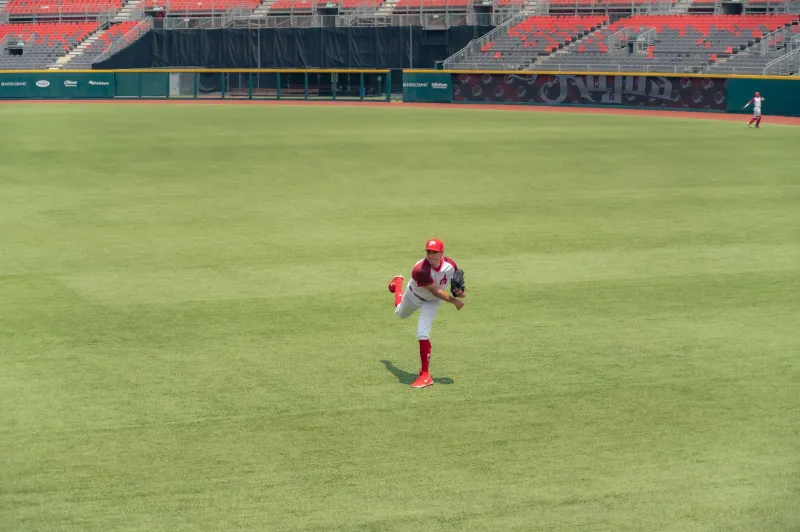
There is a particular quality of late afternoon light on a well-tended grass infield — the kind found not in any major-league city, but in places like Caledonia, Ohio, or Geneseo, Illinois, or Millington, Michigan — where the shadows lengthen across chalk-dusted base paths and the crack of an unvarnished ash bat carries clean and clear across an open field. No organ music swells. No digital scoreboard flickers. A man in a flat-brimmed woolen cap trots toward first base, and for a moment, the calendar seems to fold back upon itself by a hundred and fifty years.
This is vintage base ball — spelled, as its practitioners insist, as two words, in faithful deference to the nineteenth-century convention — and it is experiencing a quiet, determined resurgence across rural and small-town America. Driven not by nostalgia alone but by a genuine scholarly reverence for the game's origins, a growing network of clubs, preservation societies, and community volunteers is restoring the physical grounds, the period regulations, and the social customs of baseball's earliest decades. What they are building, diamond by diamond, is nothing less than a living archive of America's most storied pastime.
The Rules That Made the Game
To the uninitiated, a vintage base ball match may appear to be ordinary baseball played in costume. It is considerably more than that. Depending on which historical ruleset a club adopts — and clubs are often precise about the year they represent, whether 1858, 1864, or 1886 — the differences from the modern game are striking and revelatory.
In many early codes, a batter could request a high or low pitch. Fielders caught fly balls bare-handed, and a ball caught on one bounce was recorded as an out. Pitchers delivered underhand, from a flat position rather than an elevated mound. There were no called balls or strikes in the earliest iterations of the game. Base runners were put out by being struck with a thrown ball — a practice known as soaking or plugging — rather than tagged. And throughout all of it, the language was different: the umpire was addressed as "sir," disputes were resolved with gentlemanly deference, and the opposing club was referred to as "the visitors" regardless of venue.
These distinctions are not merely theatrical. For the men and women who study and play vintage base ball with serious intention, each rule is a data point — a window into the social assumptions, physical conditions, and community values that shaped the sport before it became a commercial enterprise.
Reclaiming the Ground Itself
Perhaps the most tangible dimension of this preservation movement is the restoration of the fields themselves. Many vintage clubs play on grounds that bear no resemblance to modern ballparks: no warning tracks, no dugouts, no outfield fences. The dimensions are often irregular, dictated by the geography of a town green or a fairground rather than by standardized specifications. Bases are stuffed canvas sacks. The pitcher's line is chalked fresh before each match.
Restoring such a field requires the kind of intimate knowledge that blends horticultural patience with historical research. Volunteers consult period photographs, newspaper accounts, and local land records to understand how a given community's original grounds were laid out. Grass varieties are chosen for their historical appropriateness. Drainage systems are installed by hand where possible. In several documented cases, clubs have partnered with county historical societies and state preservation offices to designate their grounds as sites of local cultural significance — a recognition that a well-kept dirt diamond can carry as much memory as a courthouse or a covered bridge.
The labor is considerable, and it is almost always volunteer-driven. Weekend work parties descend upon neglected fields with rakes, seed spreaders, and wheelbarrows. Retired schoolteachers work alongside young tradespeople. Farmers lend equipment. Local lumber yards donate materials. The field becomes, in the making of it, a community project in the truest sense — a shared act of custodianship that binds its participants to both one another and to the generations who played there before.
Wool, Leather, and the Weight of Authenticity
The uniforms worn by vintage base ball clubs are, by modern athletic standards, profoundly impractical. Wool flannel does not breathe. Leather-soled shoes offer little traction. Flat caps provide minimal sun protection. And yet the clubs that pursue historical authenticity with the greatest rigor insist upon these discomforts, not out of masochism, but out of respect for the historical record.
Several small American businesses have emerged to serve this niche, producing hand-sewn uniforms and period-appropriate equipment for clubs from New England to the Pacific Northwest. These craftspeople — many of whom are themselves vintage base ball enthusiasts — consult period illustrations, surviving garments in museum collections, and contemporary accounts to ensure that their products reflect the actual dress of the era being represented. A well-made vintage uniform, club members note, changes the way you hold your body, the way you move across the field. It is, in its way, a form of embodied history.
What Small Towns Find in the Old Game
For the communities that host vintage base ball clubs, the appeal extends well beyond athletic competition. In towns where the local economy has contracted and the institutions that once anchored civic life — the factory, the grange hall, the five-and-dime — have long since closed, a vintage base ball match offers something genuinely rare: a public gathering that requires nothing more than an open field and the willingness to show up.
Admission, where it is charged at all, is typically modest or voluntary. Families spread blankets on the grass. Vendors sell lemonade and hand-churned ice cream. The umpire's calls are announced in period diction — "That striker is out!" — and the crowd responds with the delighted laughter of people encountering something simultaneously foreign and deeply familiar. Children who have never watched a full nine innings of major-league baseball find themselves transfixed by a game their great-great-grandparents might have played on this very ground.
This is the quiet power of vintage base ball: not that it pretends the intervening century and a half never happened, but that it insists the original game — democratic, unhurried, rooted in community rather than commerce — still has something essential to say to the present.
The Fragility of Diamonds
For all its momentum, the vintage base ball preservation movement remains fragile. Fields require constant maintenance, and volunteer energy is finite. Clubs that lose their anchor members sometimes dissolve. Grounds that fall dormant for even a single season can be reclaimed by brush and weeds with alarming speed. Funding is perennially scarce, and the institutional support available to, say, a historic courthouse rarely extends to a hand-chalked base path.
And yet the movement persists — and in many regions, grows. National organizations such as the Vintage Base Ball Association coordinate schedules, share research, and provide a framework for clubs that might otherwise operate in isolation. Regional tournaments draw clubs from multiple states, creating networks of fellowship and mutual expertise. Oral histories are recorded. Photographs are archived. Rule books that once existed only in the collections of a handful of libraries are now digitized and freely shared.
What these keepers of the old game understand, with a clarity that is both practical and philosophical, is that a diamond left unattended does not simply go quiet. It disappears. And with it goes a particular kind of memory — not the memory of championships and statistics, but the memory of what it felt like when baseball was simply what people did on a summer afternoon, together, in a field they had cut and chalked themselves, for no reason other than the joy of the game.