The Last Lanes: How America's Family Bowling Alleys Became the Unlikely Guardians of Small-Town Life
The Last Lanes: How America's Family Bowling Alleys Became the Unlikely Guardians of Small-Town Life
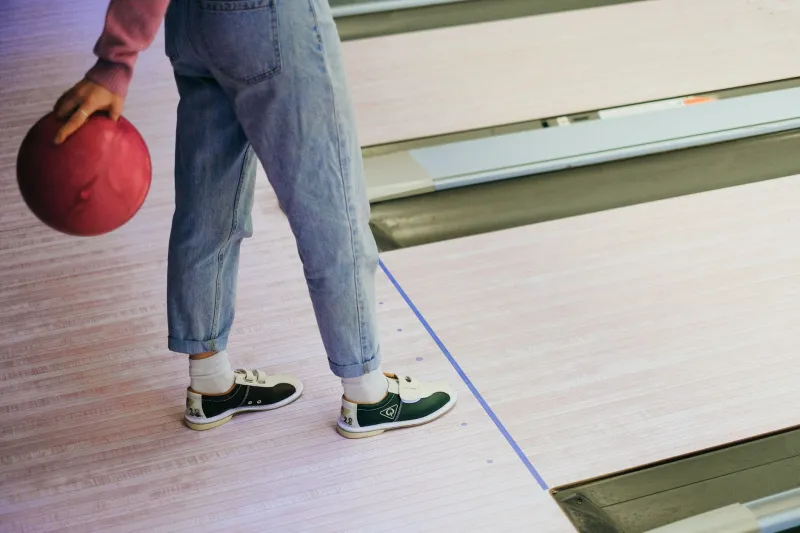
There is a particular sound that those who grew up near a family bowling alley never quite forget. It arrives in layers: the low, thunderous roll of a sixteen-pound ball traveling sixty feet of lacquered maple, the sharp percussion of pins scattering, and then — almost always — the laughter or groaning of friends gathered close. That sound, unremarkable to some, is the acoustic signature of an American institution that has quietly anchored communities across the country for the better part of a century.
Today, that sound is growing harder to find.
At the peak of bowling's cultural prominence in the early 1960s, more than 12,000 bowling establishments operated across the United States. By recent counts, that number has fallen to fewer than 4,000 — and the decline continues. Behind each closure is not merely the loss of a recreational venue, but the disappearance of something far more difficult to replace: a place where generations of neighbors, coworkers, and strangers became, through the shared ritual of league night, something resembling a community.
Temples of the Ordinary
To understand what a family bowling alley truly represents, one must look past the scuffed rental shoes and the faded murals of bowlers frozen mid-release on the wall. These establishments were, in their own unhurried way, democratic spaces — places where a factory worker and a schoolteacher could occupy adjacent lanes without ceremony or pretension.
In towns like Rhinelander, Wisconsin, and Parsons, Kansas, the local bowling alley was not simply a place to spend a Friday evening. It was a civic institution as essential, in its way, as the post office or the public library. Birthday parties were held there for children who are now grandparents. Retirement dinners were celebrated under fluorescent lights with paper plates and cake from the snack counter. Wedding rehearsal bowls — a tradition invented entirely by the kind of cheerful improvisation these places encouraged — became cherished family stories.
The physical character of these venues tells its own history. Hand-painted scoreboards, some dating to the 1950s, still hang above certain lanes, their careful lettering a testament to an era before digital displays. Wooden ball returns, worn smooth by decades of use, bear the marks of time with an honesty that no modern equipment can replicate. The snack counters — invariably serving hot dogs, nachos, and fountain sodas at prices that seem to belong to another era — operate less as profit centers than as gestures of hospitality.
The League Night Covenant
Perhaps no tradition defines the social life of the American bowling alley more completely than the weekly league. Organized bowling leagues, which proliferated throughout the postwar decades, created a structure of regular communal gathering that sociologists now recognize as a powerful binding force in civic life. Robert Putnam's landmark study of American social capital famously noted the decline of bowling leagues as a symptom of broader community fragmentation — a cultural shift so significant that it gave his 2000 book its title: Bowling Alone.
For those who participated in those leagues, the significance was felt long before any academic articulated it. League nights meant assigned teams, friendly rivalries sustained across months, and the particular pleasure of belonging to something larger than oneself without any grand ideological commitment. You simply showed up, you bowled, and you were known.
Many family bowling alleys still maintain leagues, though their numbers have thinned. In places like Dubuque, Iowa, and Gadsden, Alabama, owners speak with quiet pride about leagues that have run continuously for forty or fifty years — senior leagues, youth leagues, and mixed leagues that bring together people who might otherwise have no occasion to share the same room.
The Keepers of the Lanes
Behind the counter of nearly every surviving family bowling alley stands a figure of considerable, if unsung, dedication: the owner-operator who has chosen, against considerable economic pressure, to keep the doors open.
These individuals are often second- or third-generation proprietors who inherited not merely a business but a sense of obligation to the community the alley has long served. They speak of regulars by first name and by lane preference. They know which leagues are struggling and which families are celebrating. They absorb the costs of aging infrastructure — pinsetters from the 1970s that require parts sourced from retired machines, lane surfaces that demand expert resurfacing — because the alternative is unthinkable to them.
The pinsetter, in particular, occupies a place of mechanical legend in the culture of the bowling alley. The Brunswick A-2 and AMF 82-70 machines, workhorses of mid-century bowling, continue to operate in hundreds of establishments across the country. Mechanics who understand their intricacies are becoming rare; when one retires or passes away, the knowledge they carry is not easily replaced. Several preservation-minded organizations have begun documenting the maintenance of these machines, recognizing that the expertise required to keep them running constitutes a form of living heritage.
A Movement to Preserve What Remains
As closures have accelerated in recent years, a loose but passionate network of advocates has emerged to document and, where possible, protect what remains of America's bowling alley heritage. Local historical societies in several states have begun collecting artifacts — scorecards, league trophies, promotional photographs — that tell the story of these places as social institutions. A handful of bowling alleys have been added to state and local historic registers, acknowledging their architectural and cultural significance.
The International Bowling Campus in Arlington, Texas, maintains an archive that touches on the sport's broader history, but community advocates argue that the more intimate story — the one told by a hand-lettered scorecard from a 1967 Tuesday night league in a small Ohio town — deserves its own careful stewardship.
Social media, for all its disruptions, has also become an unexpected ally. Photographs of vintage bowling alleys circulate widely online, drawing expressions of collective nostalgia that frequently translate into organized efforts to support surviving establishments. When a beloved alley in a small community announces its potential closure, the response from both local residents and distant admirers can be swift and substantial.
What Is Lost When the Lights Go Dark
The closure of a family bowling alley is rarely treated as a significant cultural event. There is no ribbon-cutting ceremony in reverse, no formal acknowledgment of what the community is surrendering. The lanes go quiet, the rental shoes are boxed up, and the building is repurposed or left to deteriorate.
But those who have witnessed such closures describe something that resists easy categorization — a grief that is social as much as sentimental. The loss is not merely of a building or a business, but of a reliable occasion for gathering, a neutral ground where community was renewed week after week through the simple, companionable act of play.
In an era when Americans increasingly retreat into private digital spaces, the bowling alley offered something genuinely countercultural: a reason to leave the house, to stand beside your neighbors, and to care, however briefly, about the same thing at the same time.
That, perhaps, is the most compelling argument for their preservation. Not nostalgia alone, though nostalgia is no small thing. But the recognition that some institutions carry within them a way of being together that, once lost, cannot simply be downloaded or streamed back into existence.
The pins are still standing, in the alleys that remain. The question is whether enough of us will show up to keep them that way.