Nails, Know-How, and Neighborhood: The Family Hardware Stores That Still Hold America Together
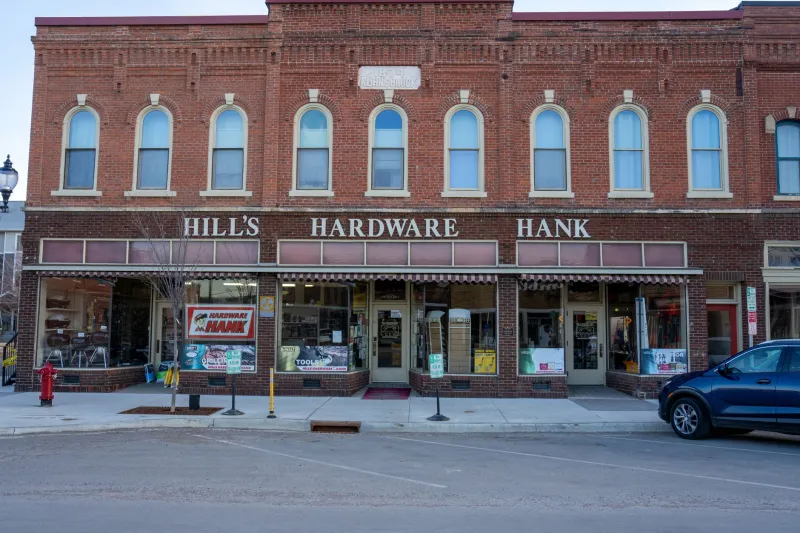
There is a particular smell that greets you at the threshold of an old hardware store — a compound of raw timber, machine oil, iron dust, and something faintly mineral that no air freshener has ever successfully replicated. It is the scent of utility, of purpose, of things made to last. For generations of Americans, that smell meant Saturday morning: a parent or grandparent leading a child by the hand through narrow aisles stacked floor to ceiling with goods whose names alone constituted an education. Lag bolts. Cotter pins. Pipe dope. Muriatic acid. A vocabulary of self-reliance, offered freely to anyone who walked through the door.
Today, that door is increasingly hard to find.
The Corner Store That Knew Your Name
At its height, the independent hardware store was one of the most democratic institutions in American civic life. Unlike the department store, which catered to aspiration, or the pharmacy, which addressed vulnerability, the hardware store met its customers at the level of competence. You came because something needed fixing, building, or improving — and the person behind the counter, almost invariably the owner or a long-tenured employee, helped you figure out exactly how.
These establishments were rarely glamorous. Their floors were wide-plank wood, darkened by decades of foot traffic and the occasional spilled solvent. Their shelving systems were idiosyncratic, organized by a logic that existed only in the proprietor's mind but proved, somehow, entirely reliable. Ask for a specific size of machine screw and the owner would disappear into the back, returning moments later with a small paper bag and a price written in pencil on the outside. The transaction was almost incidental to the consultation.
In communities across the American Midwest, South, and New England, hardware stores occupied the same cultural real estate as barbershops and feed stores — places where information circulated as freely as goods. A farmer might learn which lumber yard was offering the best price on treated pine. A first-time homeowner might receive an unrequested but invaluable tutorial on how to sweat copper pipe. A child might be handed a small nail or a washer, simply because the owner understood that curiosity, properly encouraged, grows into capability.
Portraits in Persistence
In Galesburg, Illinois, a hardware store founded in the early twentieth century still occupies the same brick storefront it always has. The current proprietor, the third generation of his family to manage the place, can identify the provenance of nearly every item on his shelves. He speaks of certain long-discontinued products — particular formulations of wood filler, specific grades of sandpaper — with the reverence an archivist might reserve for a rare manuscript. His store is not merely a retailer. It is, in the most literal sense, a repository.
Further south, in a small Tennessee county seat, a hardware store that opened in the 1940s still hand-letters its window signage each season. The proprietor uses the same style of block lettering her father taught her, a visual continuity that has made the storefront itself a landmark. Locals navigate by it. Visitors photograph it. The sign does not advertise so much as it testifies — to longevity, to craft, to a refusal to be replaced by a printed banner ordered from the internet.
In New England, a hardware store operating since the nineteenth century maintains a drawer system for loose fasteners that predates the concept of unit pricing. Customers scoop what they need, the proprietor estimates the weight by feel, and a price is agreed upon through a negotiation that has less to do with commerce than with trust. The store has survived two world wars, the Great Depression, the rise of the chain home-improvement center, and the arrival of overnight shipping. It persists not despite its anachronisms but, in many ways, because of them.
What Is Lost When the Last Bin Empties
The decline of the independent hardware store is, on its surface, a story about economics. Big-box retailers offer lower prices, wider selections, and parking lots that can accommodate a pickup truck hauling a trailer. Online vendors deliver specialty items to the doorstep within forty-eight hours. The competitive arithmetic is not subtle.
But the full accounting requires more than a price comparison. What disappears with the independent hardware store is a specific and irreplaceable form of knowledge transfer — the kind that happens face to face, in real time, in response to an actual problem being described by an actual person. The employee at a national chain, however well-intentioned, is unlikely to know that the soil in your particular county runs high in clay and that certain adhesives will fail because of it. The algorithm that powers a product recommendation engine has never watched a roof fail after a hard winter or helped a neighbor re-hang a door that has swollen out of its frame.
There is also the matter of community anchoring. The independent hardware store, like the diner and the barbershop, is a place where the social fabric is quietly maintained. Conversations begin over a display of weather stripping and continue into matters of local politics, family news, and neighborhood history. The proprietor, present five or six days a week for decades, accumulates a kind of institutional memory that no corporate entity can replicate or acquire.
The Custodians of the Hands-On Tradition
Those who have studied American material culture — the historians, the preservationists, the folklorists — have begun to recognize the independent hardware store as something worthy of serious attention. Several oral history projects have recorded the recollections of longtime proprietors, capturing not only business histories but the broader narratives of American domestic and agricultural life that passed through their stores. Some institutions have begun collecting hardware store ephemera: the hand-painted signs, the wooden drawer pulls, the ledger books that recorded transactions in a careful, slanted cursive.
These efforts matter because the knowledge held by a veteran hardware proprietor is not written down anywhere. It exists in the mind, in the hands, in the accumulated experience of having answered the same question ten thousand times in ten thousand slightly different ways. When that proprietor retires and the store closes, that knowledge does not transfer to a database. It simply ends.
A Place Worth Preserving
To make the case for the independent hardware store is not to argue against progress or to romanticize inconvenience. It is, rather, to insist that certain forms of human exchange — the expert consultation, the patient explanation, the relationship built over years of small transactions — carry a value that cannot be captured in a price-per-unit comparison.
The hardware store, at its best, is an argument for competence: for the idea that ordinary people, given the right tools and the right guidance, can build and repair the material world around them. That argument has never been more necessary than it is now, when the distance between a person and the things they own — the things they live in, drive, and depend upon — grows wider with each passing year.
The chalk on the bin labels fades. The sawdust settles into the grain of the old wood floor. The proprietor, who has answered every question you could think to ask, watches the door and waits. It is worth walking through it, while there is still time.