Layers of Living: The Quiet Crusade to Rescue America's Historic Wallpaper
Layers of Living: The Quiet Crusade to Rescue America's Historic Wallpaper
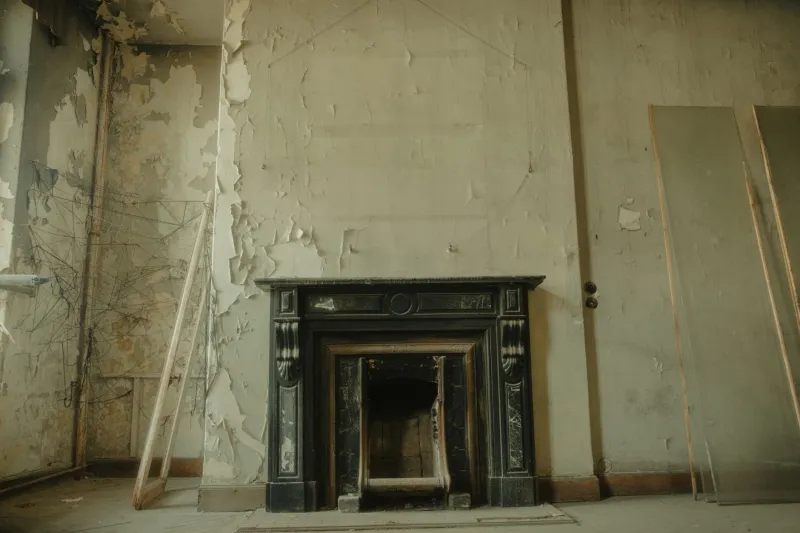
There is a moment, familiar to every historic preservation contractor who has ever stripped a wall, when the scraper blade catches something unexpected — a flash of deep indigo, a repeating vine motif, the ghost of a pastoral scene printed in faded ochre. The latex paint peels away in rough sheets, and beneath it, sometimes beneath several more layers of its own kind, lies wallpaper that may not have seen daylight in a century or more. For most renovators, it is an inconvenience. For a small, intensely dedicated community of conservators and craftspeople scattered across the United States, it is a discovery of the first order.
America's wallpaper heritage is vast, largely unexamined, and disappearing at a rate that troubles those who understand its significance. From Federal-period block prints applied in the parlors of prosperous New England merchants to the sweeping scenic panoramas that adorned antebellum Southern taverns, these decorative surfaces constitute a form of domestic archaeology — one that speaks with unusual directness about the aspirations, aesthetics, and everyday lives of the people who chose them.
The Wall as Autobiography
To understand why historic wallpaper matters, it helps to consider what it once represented. In the eighteenth and early nineteenth centuries, papered walls were a considerable luxury. Imported French papers — particularly the celebrated panoramic designs produced by manufacturers such as Zuber & Cie, some of which depicted idealized American landscapes for European export — carried enormous social prestige. To hang such a paper was to announce, in the most visible domestic register available, one's familiarity with the wider world of taste and commerce.
As American manufacturing matured through the mid-nineteenth century, machine-printed papers brought pattern and color within reach of a far broader public. The results were exuberant: Gothic Revival tracery for parlors aspiring to medieval gravitas, Rococo Revival florals for bedrooms seeking romantic softness, Eastlake geometric designs for sitting rooms embracing the reformist aesthetic of the age. Each choice was a small act of self-definition, a declaration made in paste and pigment on a plaster wall.
"People chose their wallpaper with the same care they chose their furniture or their clothing," observes one conservator based in the mid-Atlantic region who has spent decades cataloguing historic papers removed from structures slated for demolition. "It reflected who they were, or who they wished to be. When we lose that paper, we lose a layer of their self-portrait."
The Science and Sensibility of Conservation
The physical recovery of historic wallpaper is work that demands both scientific rigor and an almost meditative patience. Papers adhered to plaster walls for a hundred and fifty years do not surrender easily. Humidity, temperature fluctuation, insect damage, and the accumulated weight of subsequent redecoration have, in many cases, reduced original surfaces to brittle, fragmentary remnants. The conservator's task is to stabilize what remains, document it thoroughly, and — where circumstances permit — recover it in sections large enough to be meaningful.
Consolidation is often the first step: a carefully chosen adhesive, applied with a fine brush or injected behind lifted sections, coaxes fragile paper back against its substrate. Facing tissues protect the surface during handling. Photographic documentation, conducted under raking light to reveal texture and under ultraviolet light to expose earlier campaigns of decoration, precedes any physical intervention. Some conservators employ multispectral imaging to recover patterns that have faded beyond ordinary visibility — a technique borrowed from manuscript conservation that has yielded remarkable results on papers once dismissed as too damaged to study.
The chemistry of historic wallpaper adds further complexity. Early papers were colored with pigments that include arsenic-based greens, lead whites, and Prussian blues — substances that require careful handling and, in some cases, specialized storage conditions. The paper stocks themselves range from robust rag papers to fragile wood-pulp sheets that crumble at a touch. No single conservation protocol serves all cases, and experienced practitioners speak of developing an intuitive feel for each material — knowing, almost by instinct, how much moisture a given paper will tolerate before it begins to fail.
The Archivists and Their Pattern Blocks
Parallel to the work of field conservators runs the quieter labor of those who catalogue the physical evidence of wallpaper production: the carved wooden blocks, the engraved rollers, and the surviving pattern books through which manufacturers once displayed their wares to retailers and customers alike.
Several American institutions hold significant collections in this area. The Cooper Hewitt, Smithsonian Design Museum in New York maintains one of the most comprehensive archives of historic wallpaper samples in the country, numbering in the tens of thousands of specimens. The Colonial Williamsburg Foundation has undertaken extensive research into eighteenth-century papers appropriate to its historic structures. Regional historical societies from New Hampshire to Louisiana hold pattern books and trade catalogues that document the full sweep of American wallpaper fashion across two centuries.
Beyond institutional walls, private collectors and independent archivists have assembled holdings of considerable depth. Some focus on particular periods or regional manufacturers; others pursue the wooden printing blocks themselves — objects that are, in their own right, works of considerable craft. A well-carved block for a Federal-period repeating design represents hours of skilled labor, its surfaces worn smooth by decades of use, its pattern as legible today as when it was first pressed against dampened paper in a workshop long since vanished.
Reproduction and Revival
For those engaged in restoring historic structures, the conservation of original wallpaper is only part of the challenge. Where original papers are too fragile or too incomplete to remain in place, the question becomes one of appropriate replacement — and here a small industry of specialist manufacturers and artisan printers has found its purpose.
A handful of American firms, along with several European counterparts, produce historically accurate reproduction wallpapers using period-appropriate techniques. Hand-block printing, in which carved blocks are inked by hand and pressed individually against each sheet, remains the most faithful method for reproducing Federal and early Victorian designs. The process is slow — a skilled printer may complete only a few dozen yards in a working day — and correspondingly expensive, but for a significant historic interior, it is often the only approach that achieves the right visual weight and surface character.
Some practitioners have gone further, working directly from surviving original blocks or from detailed documentation of historic patterns to produce papers that are, in effect, facsimiles of specific documented examples. When such a paper is hung in a room for which it was originally designed, or in one closely comparable, the effect can be startling — a sudden, almost visceral reconnection with the sensibility of another era.
What the Walls Remember
There is a philosophical dimension to this work that its practitioners acknowledge freely, even if they approach it with characteristic restraint. Wallpaper, unlike furniture or portraiture, was never intended as a lasting record. It was a background, a setting for life rather than a monument to it. Its survival is almost always accidental — the consequence of a subsequent owner's preference for covering rather than removing, or of a room sealed off and forgotten for generations.
That accidental quality is precisely what makes it valuable. Wallpaper tells the truth about domestic life in a way that more self-conscious artifacts rarely do. It was chosen for pleasure and convenience, not posterity. The faded roses on a farmhouse bedroom wall in Ohio, the trompe-l'oeil marble dado in a Vermont tavern, the bold geometric frieze in a Philadelphia rowhouse — each speaks without pretension about the world its inhabitants inhabited and the beauty they reached toward within their means.
To recover these surfaces, however incompletely, is to recover something of that reaching. And in a country still young enough that much of its material past remains within arm's reach — peeling away, layer by patient layer — the work of those who know how to look, and how to listen, remains as urgent as it has ever been.