Grooves of the Republic: How Independent Record Stores Became America's Sonic Archives
Grooves of the Republic: How Independent Record Stores Became America's Sonic Archives
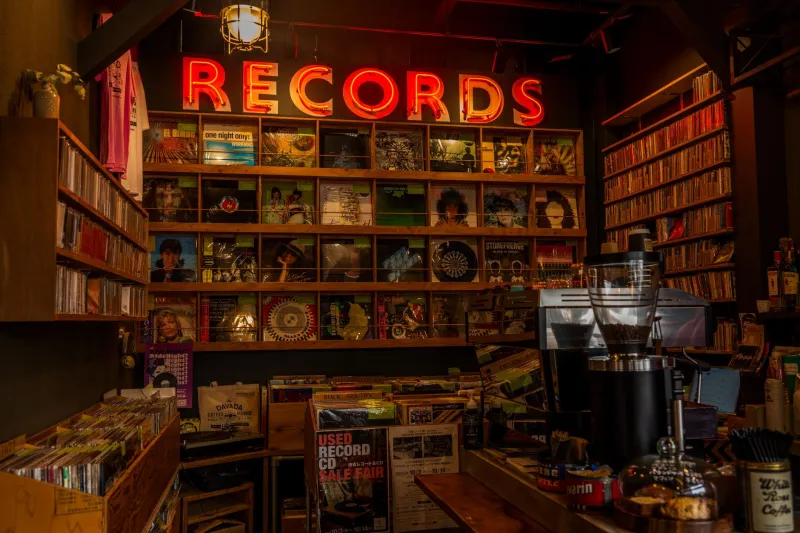
There is a particular quality of silence inside an independent record store — not the silence of emptiness, but the silence of concentration. Browsers move slowly, fingers tracing the spines of sleeves with the deliberateness of archivists. Conversation, when it comes, tends toward the specific: a pressing date, a regional label, the name of a session musician who played piano on a single recorded in Memphis in 1954 and never recorded again. These are not casual transactions. They are acts of memory.
Across the United States, a resilient constellation of independent record shops has evolved, often without formal designation or institutional support, into something far more consequential than retail. They have become the primary repositories of American musical culture that the mainstream industry chose not to preserve — regional sounds, limited pressings, and vernacular traditions that streaming platforms, for all their computational abundance, will never fully reconstruct.
The Archive Behind the Counter
In cities and small towns alike, the back rooms and glass cases of these stores hold documents of extraordinary historical significance. A shellac 78 recorded in the early 1930s by a gospel quartet from rural Alabama carries within its grooves not only music but evidence — of migration patterns, of religious practice, of the particular acoustics of a church that no longer stands. A mid-century jazz pressing on a Cincinnati regional label captures a local scene that never attracted the attention of the major houses, yet shaped the musical development of dozens of musicians who went on to define American sound.
Owners of these shops frequently describe themselves not as retailers but as stewards. "I think of what I do as closer to librarianship than sales," says one proprietor of a Chicago shop whose inventory spans nearly a century of recorded American music. "When someone brings in a collection from an estate, I'm not thinking about the margin. I'm thinking about what's in those crates that might not exist anywhere else."
This orientation toward preservation carries practical consequences. Many independent shops maintain detailed provenance records for significant acquisitions, noting where a collection originated and what is known of its history. Some have developed informal relationships with university music departments, local historical societies, and documentary filmmakers who rely on these stores as primary research sources.
Regional Pressings and the Sounds That Commerce Forgot
The American recording industry has always been, at its core, a national enterprise oriented toward scale. What sold in volume, what traveled across regional lines, what appealed to the broadest possible audience — these were the priorities that shaped the catalog. The consequence was a systematic underrepresentation of local and regional music that, precisely because of its particularity, holds enormous cultural and historical value.
Independent record stores have, often by accident and later by intention, filled this gap. A shop in New Orleans may hold pressings of Mardi Gras Indian chants that were recorded in limited runs for neighborhood distribution and never entered any national catalog. A store in Appalachia may carry 78s of old-time string band music recorded by itinerant field collectors in the 1920s, pressings so scarce that academic ethnomusicologists have made pilgrimages to acquire even partial copies.
The owners of these stores tend to develop deep expertise in the musical geography of their regions. They know which labels operated out of which cities, which studios recorded which genres, and which regional sounds cross-pollinated in ways that the standard historical narrative does not acknowledge. This knowledge, accumulated over decades and transmitted through conversation and correspondence, constitutes a form of oral history as important as the records themselves.
The Community That Gathers
Perhaps the most underappreciated function of the independent record store is its role as a gathering place for people who share an unusual kind of devotion. On any given Saturday afternoon, a well-regarded shop might host, without formal arrangement, a retired schoolteacher who collects pre-war blues, a jazz musician researching the stylistic roots of a regional tradition, a documentary producer looking for period recordings, and a teenager encountering a particular sound for the first time. The conversation that develops among these visitors is irreplaceable.
This is the oral history dimension that no digitization project can fully replicate. The knowledge that circulates in a good record store — who played on what session, what the circumstances of a particular recording were, how a regional style developed and where it traveled — exists largely in the minds of collectors and enthusiasts who have spent lifetimes in pursuit of it. The store provides the physical context that draws these people together and prompts them to speak.
Some shops have formalized this function. Listening sessions, collector meetups, and informal lecture series have become fixtures at stores that understand their role as community anchors. Others host local musicians who perform in conversation with the records that influenced them, creating an intergenerational dialogue between the archive and the living tradition.
The Fragility of the Physical Record
Vinyl and shellac are durable in some respects and profoundly vulnerable in others. Heat, moisture, improper storage, and simple neglect have destroyed untold quantities of irreplaceable recordings. The independent record store, by maintaining climate-appropriate conditions and handling collections with care, performs a preservation function that is easy to overlook but impossible to overstate.
When a significant collection arrives — the accumulated holdings of a deceased collector, the inventory of a closed shop, the estate of a regional musician — the independent store often represents the last institutional buffer between those materials and dispersal or loss. Owners who understand their archival responsibility will sort carefully, research thoroughly, and sometimes decline to sell items they believe belong in institutional collections.
Several shops have developed relationships with the Library of Congress's American Folklife Center and similar institutions, occasionally donating or facilitating the transfer of materials of exceptional historical significance. This quiet collaboration between commercial enterprise and public memory represents one of the more elegant arrangements in American cultural life.
What the Algorithm Cannot Hear
Streaming platforms have made an extraordinary quantity of music available to an unprecedented number of listeners. This is not a small thing. But the catalog of any streaming service reflects the decisions of an industry that was always oriented toward commerce rather than comprehensiveness. What was recorded but never released, what was released but never distributed nationally, what was distributed but fell out of print before the digital era — these gaps are vast, and they correspond precisely to the terrain that independent record stores have always occupied.
The sounds preserved in these shops represent a fuller account of American musical life than any platform currently offers. They document the music that communities made for themselves, the traditions that persisted outside commercial validation, the regional voices that never needed a national audience because they were already speaking directly to the people who needed to hear them.
To browse the shelves of a serious independent record store is to encounter American history in one of its most intimate and honest forms. The grooves pressed into these discs hold not only melody and rhythm but the texture of particular lives, the acoustics of vanished spaces, and the emotional register of moments that no written record could fully capture. The stores that hold these objects, and the people who gather within them, are performing an act of cultural stewardship as significant as anything conducted under institutional auspices — and doing so with considerably less recognition than they deserve.