Cathedrals of Cinema: The Devoted Guardians Keeping America's Grand Movie Palaces Alive
Cathedrals of Cinema: The Devoted Guardians Keeping America's Grand Movie Palaces Alive
There is a particular quality of hush that descends when you step inside a great movie palace — not the silence of an empty room, but the weighted stillness of a space that has absorbed a century of collective wonder. The air carries the faint ghost of perfume and popcorn, of organ music and applause. The walls, if they could speak, would offer testimony stretching from the anxious years of the Great Depression to the present day, when the fate of these irreplaceable structures hangs in a delicate balance between neglect and renewal.
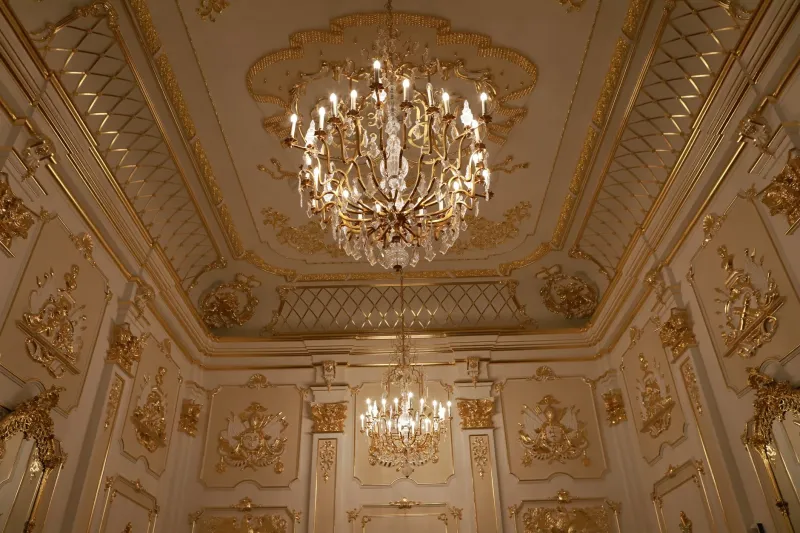
Across the United States, roughly 150 of these grand old houses survive in varying states of health. Some dazzle visitors with freshly restored chandeliers and re-gilded plasterwork. Others languish behind boarded facades, their interiors slowly surrendering to time and moisture. The difference between survival and ruin, in nearly every case, comes down to people — ordinary citizens who refused to accept that a landmark of civic memory should simply disappear.
Architecture as Autobiography
To understand why these buildings inspire such fierce loyalty, one must first appreciate what they were designed to accomplish. Beginning in the mid-1910s and reaching their zenith through the 1920s and 1930s, movie palaces were conceived as deliberate acts of democratic fantasy. Architects such as John Eberson, Thomas Lamb, and the Rapp & Rapp firm constructed interiors that borrowed freely — and exuberantly — from Moorish courtyards, Italian Renaissance ballrooms, Baroque cathedrals, and ancient Egyptian temples.
The Tampa Theatre, opened in 1926, remains among the finest surviving examples of Eberson's signature "atmospheric" style, wherein the auditorium ceiling is painted to suggest an open sky, complete with projected stars and drifting clouds. Patrons seated beneath it were transported, however briefly, to a Mediterranean courtyard far removed from the worries of daily life. Detroit's Fox Theatre, a 1928 Moorish-Hindu fantasia seating nearly 5,000 guests, deploys a similar logic at overwhelming scale — its six-story lobby adorned with carved stone, imported silk, and gold leaf enough to make the eye lose its footing.
These spaces were never merely functional. They were civic statements, declarations that working-class Americans deserved beauty on a palatial scale. That original democratic spirit is precisely what contemporary preservationists invoke when making the case for their survival.
The Anatomy of a Rescue
Preservation stories rarely begin with a ribbon-cutting. More often, they begin with a crisis — a demolition permit, a collapsed roof, a bankruptcy filing — and a small group of alarmed citizens who decide that crisis is unacceptable.
The Tampa Theatre's salvation followed that familiar arc. By the late 1970s, the theater faced imminent demolition. A grassroots campaign led by community members, historians, and arts advocates succeeded in placing the building on the National Register of Historic Places in 1978 and transferring its management to the City of Tampa. Today, operated by a dedicated nonprofit foundation, the theater hosts more than 600 events annually — from classic film screenings and live concerts to private rentals and educational programs — welcoming hundreds of thousands of visitors each year.
The Fox Theatre in Detroit tells a comparable story of near-loss and improbable revival. By the mid-1980s, the building had deteriorated severely and faced an uncertain future. A $12 million restoration effort, completed in 1988, returned the Fox to its original grandeur and repositioned it as one of the city's premier live entertainment venues. The theater now operates as a cornerstone of Detroit's cultural economy, hosting Broadway touring productions, major concerts, and community events that draw audiences from across the region.
Both cases illustrate a truth that preservation advocates have long understood: the argument for saving a movie palace is most persuasive when it is also an argument for economic vitality, community identity, and civic pride.
Living Venues, Not Frozen Monuments
One of the most significant shifts in the preservation movement over the past two decades has been a philosophical one. Early campaigns often emphasized historical significance above all else, framing these buildings primarily as architectural artifacts worthy of protection on scholarly grounds. Contemporary advocates have largely abandoned that framing in favor of something more pragmatic and, ultimately, more durable.
"A building that isn't used is a building that dies," observes a common refrain among theater managers and preservation officers. Programming diversity has become the lifeline. Silent film series with live organ accompaniment, international cinema festivals, community theater productions, graduation ceremonies, wedding receptions, and school field trips now fill calendars that a single-screen cinema model could never sustain.
The Ohio Theatre in Columbus, another atmospheric masterwork saved from a 1969 demolition threat, has evolved into the permanent home of the Columbus Symphony Orchestra, a partnership that ensures the building's relevance extends far beyond its cinematic origins. The Paramount Theatre in Oakland, California — a 1931 Art Deco landmark of staggering beauty — similarly anchors its programming around the Oakland East Bay Symphony while hosting an eclectic calendar of events that reflects the full diversity of its surrounding community.
These hybrid identities — part historic landmark, part active performance venue, part community gathering space — represent the most viable model for long-term survival.
The Human Thread
Beyond the architectural surveys and the fundraising campaigns, the preservation of movie palaces is sustained by something harder to quantify: the accumulated devotion of the people who love them. Longtime patrons who remember attending Saturday matinees as children. Volunteer ushers who have spent decades learning every quirk of a particular building's acoustics. Projectionists who maintain vintage equipment with the care of museum conservators.
Their oral histories constitute a living archive as valuable as any architectural drawing. They remember the smell of the lobby on a summer evening, the sound of the Wurlitzer organ warming up before a screening, the particular quality of light that fell through stained-glass windows onto terrazzo floors. These memories are not merely sentimental. They are the connective tissue between past and present, the human evidence that these spaces have mattered across generations.
Preservation organizations increasingly recognize this and have begun collecting oral histories with the same rigor applied to physical restoration. Recorded interviews, community memory projects, and digital archives are extending the reach of individual recollection, ensuring that the stories attached to these buildings survive even when the physical structures themselves require reinvention.
A Future Written in Gold Leaf
The challenges ahead are considerable. Deferred maintenance accumulates. Restoration costs — particularly for the specialized plasterwork, custom tile, and hand-painted surfaces that define these interiors — can reach into the tens of millions of dollars. Federal historic tax credits, state preservation grants, and philanthropic support provide essential resources, but they rarely arrive without persistent advocacy and creative financial structuring.
Yet the trajectory of the past several decades offers genuine cause for measured optimism. Buildings that seemed lost have been reclaimed. Communities that once took their palaces for granted have rallied to defend them. A new generation of arts administrators, architectural historians, and civic leaders has inherited both the responsibility and the passion for this work.
The movie palace, at its finest, was always more than a place to watch a film. It was a promise — that beauty was not the exclusive province of the wealthy, that imagination deserved a magnificent address, that a community could recognize itself in the grandeur it chose to build and sustain. That promise, wherever these theaters endure, remains as luminous as the gold leaf on their ceilings.