The Honest Still: How America's Small-Batch Distillers Are Preserving Whiskey's Frontier Soul
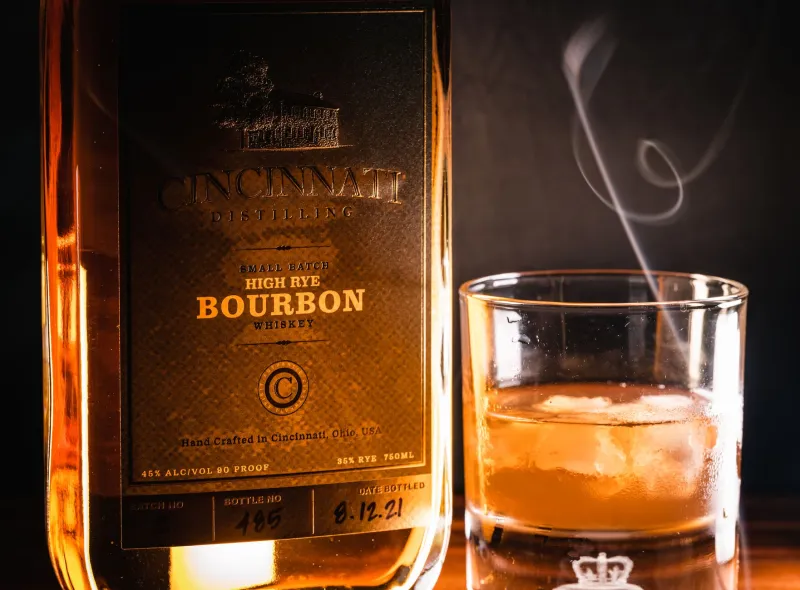
A copper pot still, properly made, is a functional sculpture. Its curves are not decorative but thermodynamic — each taper and expansion calculated to direct the behavior of vapor, to separate the desirable from the harmful, to coax from fermented grain a liquid of specific character. The copper itself is not incidental: it reacts with sulfur compounds in the distillate, softening what would otherwise be harsh, lending the finished spirit a quality that distillers describe with a word that sounds almost philosophical — smoothness. Strip away the copper, accelerate the process with column stills and industrial efficiency, and you produce something that is technically whiskey. Whether it is honest whiskey is a question that a growing community of American craft distillers is determined to keep asking.
Roots in the Rye
American whiskey has always been, at its core, a frontier proposition. The Scots-Irish settlers who carried their distilling knowledge into the Pennsylvania backcountry and eventually down the Appalachian spine in the late eighteenth century were not pursuing a luxury product. They were converting surplus grain into a commodity that could be transported, traded, and taxed — though the taxing part generated the Whiskey Rebellion of 1794, the young republic's first serious test of federal authority and a reminder that spirits have always been political as well as gustatory.
The techniques those early distillers employed were simple by necessity: a copper pot still, a worm condenser coiled in a barrel of cold water, a fire of local hardwood. The grain — rye in Pennsylvania, corn in Kentucky, whatever grew in abundance — was ground, cooked, fermented with wild or saved yeast, and run through the still twice or three times to achieve the desired proof. Aging in charred oak barrels, which would eventually become the legal requirement for straight bourbon, was initially a practical matter of storage and transport rather than a deliberate flavor strategy. The caramel and vanilla notes that bourbon drinkers now prize were a happy accident of the barrel.
For much of the twentieth century, consolidation and Prohibition's long aftermath concentrated American whiskey production in the hands of a relatively small number of large distilleries. The craft distilling revival that began in the 1990s and accelerated dramatically after 2010 has partially reversed that consolidation — the United States now counts more than two thousand craft distilleries, a figure that would have seemed implausible two decades ago.
Copper and Conviction
Not all of those distilleries are engaged in the same project. The craft spirits market encompasses everything from genuine small-batch producers using traditional methods to operations that purchase industrial neutral spirit and re-label it with artisanal packaging. The distinction matters enormously to practitioners like Thomas Calloway, who has been distilling bourbon on a forty-gallon copper pot still in eastern Kentucky for nine years.
"A column still is a machine," Calloway says, running a hand along the shoulder of his still — a piece commissioned from a fourth-generation coppersmiths in Louisville. "It runs continuously, it strips everything out, it produces a consistent product. That consistency is the point. But when you strip everything out, you also strip out the character. My still has to rest between runs. It has to be cleaned by hand. It makes decisions, in a way — it responds to the grain, to the temperature, to the season. That's not inefficiency. That's flavor."
Calloway's argument is echoed across the community of serious craft distillers: that the inefficiencies of traditional methods are not bugs to be engineered away but features that encode the specificity of place, grain, and maker into the finished spirit. A whiskey distilled from heritage Bloody Butcher corn grown in a particular Virginia valley, fermented with a house yeast strain maintained for a decade, and run through a copper pot still by a distiller who adjusts his cuts by smell and taste rather than by instrument — that whiskey is, by definition, unrepeatable. It is a document of a moment and a place.
The Cooperage Question
If the still is one pillar of traditional whiskey production, the barrel is the other — and the craft of cooperage, the making of wooden casks, is itself a discipline under pressure. American white oak barrels, charred on the interior, are the legal vessel for straight bourbon and rye; the interaction between spirit and wood over months or years of aging is responsible for the majority of the finished whiskey's color, aroma, and flavor complexity. A poorly made barrel — one with uneven stave thickness, inadequate seasoning of the wood, or imprecise charring — will produce inferior whiskey regardless of what went into it.
At a cooperage outside Bardstown, Kentucky, master cooper David Whitfield splits his own staves from air-dried white oak logs, a practice that most industrial cooperages abandoned in favor of kiln-dried lumber decades ago. Air drying, which takes two to three years, produces staves with a more complex tannin structure and lower moisture content — qualities that translate, Whitfield maintains, into more nuanced wood interaction during aging.
"The barrel is half the whiskey," he says, examining a stave for grain straightness before setting it aside. "Maybe more. You can have perfect distillate and ruin it in a bad barrel, or you can take a rough new make and let a good barrel do the work over time. The wood is alive, even after it's cut. It moves with temperature and humidity. The whiskey moves with it. That's not something you can shortcut."
Whitfield supplies barrels to a dozen small distilleries in Kentucky and Tennessee, all of them committed to traditional aging rather than the accelerated maturation techniques — pressure cycling, ultrasonic treatment, miniature barrels — that some producers have adopted to reduce time to market. For him and his customers, the years spent aging are not an inconvenience but an argument: that quality cannot be manufactured on demand, that some things require time to become what they are.
Memory in a Glass
The language that serious craft distillers use to describe their work is frequently the language of memory and inheritance. They speak of recovering lost grain varieties, of reconstructing pre-Prohibition recipes from archival sources, of honoring the knowledge of distillers who worked before federal regulation standardized the industry. There is a historiographical dimension to their project that sits comfortably alongside the more overtly preservationist work celebrated elsewhere in American heritage culture.
"When I make a rye whiskey from a grain that was standard in Pennsylvania in 1800," says one Virginia distiller, "I'm not doing a re-enactment. I'm asking what that flavor actually was — what those people tasted. The grain is different now, the water is different, I'm different. But I'm as close as I can get. And that proximity to the past seems worth something."
It does. The copper still, the split-stave barrel, the unhurried years in the rickhouse — these are not affectations of a market looking for differentiation. They are a considered refusal to let the industrial logic of efficiency have the final word on what American whiskey is and means. In a culture that has largely surrendered the making of things to machines, the distiller who tends his copper and waits for his barrels is keeping alive a form of knowledge that cannot be downloaded, replicated, or mass-produced. It can only be practiced, patiently, one honest run at a time.