Ink Against Oblivion: The Volunteer Archivists Racing to Rescue Small-Town America's Newspaper Heritage
The smell hits you before anything else. It is a compound scent—part dust, part chemical decay, part something that functions almost like memory itself—and it rises from the stacks of newsprint with an insistence that no amount of institutional ventilation quite manages to dispel. For those who work regularly among deteriorating newspaper archives, it has become a familiar and, in its way, beloved smell: the odor of history in the process of disappearing.
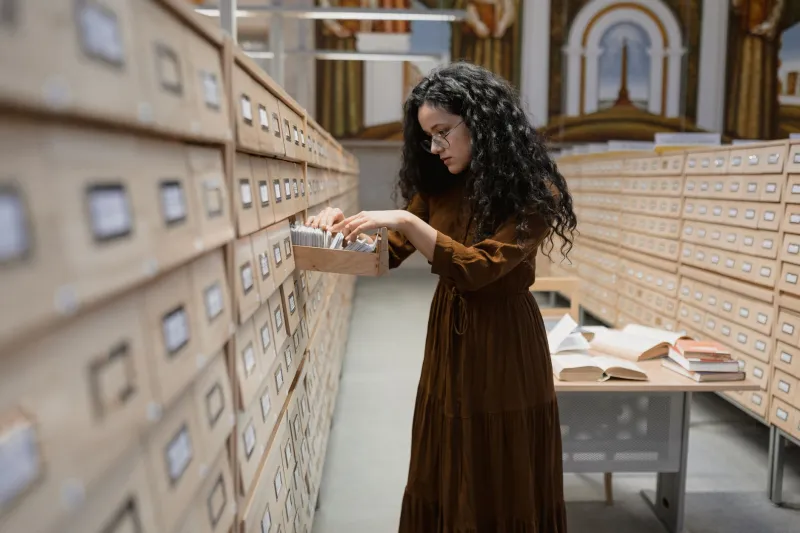
In a converted storage room at the back of a public library in a small Ohio river town, a retired schoolteacher named Margaret Hollis is doing what she does every Tuesday and Thursday morning: wearing cotton gloves, breathing carefully through a particulate mask, and turning the pages of a newspaper that was last read by someone who is almost certainly no longer living. The edition is from March of 1887. The headline concerns a local mill fire. The paper is the color of old bone and fractures at the edges with a sound like the softest possible applause.
"This is the only place this story exists," Hollis says, not looking up from the page. "It didn't make the state papers. It didn't make any history book. If this crumbles, it's gone. The mill is gone. The families who worked there—most of them are gone. This is what's left."
The Ephemeral Made Permanent
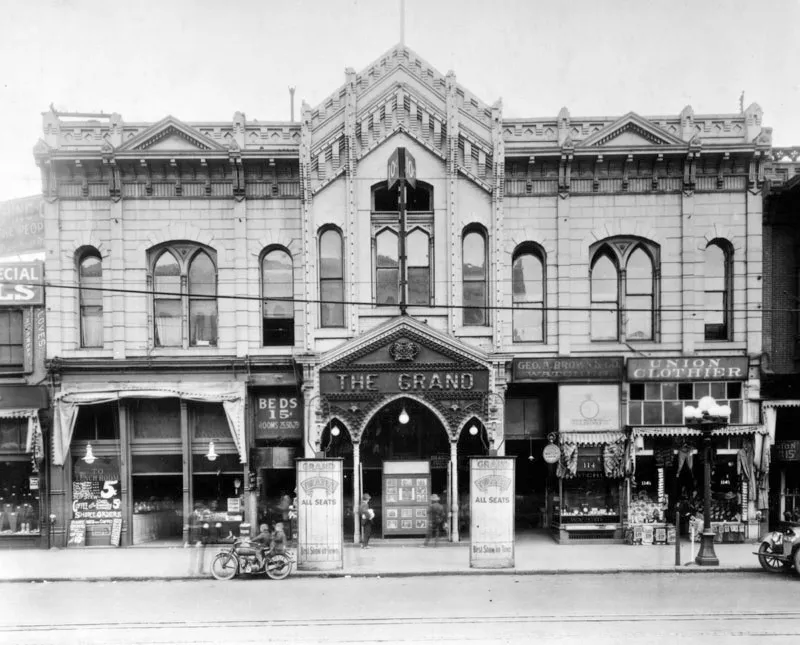
The American small-town newspaper was never designed to last. Printed on cheap newsprint, distributed for a few pennies, and intended to be read once and discarded, the weekly and semi-weekly papers that served rural and small-town communities throughout the nineteenth and early twentieth centuries were, by their nature, ephemeral objects. That any substantial number of them have survived at all is largely the result of accidents of storage—the instinct of a particular librarian to bind and shelve rather than discard, the serendipitous dryness of a particular basement, the indifference of a particular institution to the value of what it held.
What these papers contain is, from a historical standpoint, irreplaceable. Birth notices, obituaries, legal announcements, letters to the editor, agricultural reports, accounts of local elections and church socials and industrial accidents—the small-town newspaper documented the texture of American life at a granularity that no other source approaches. Census records tell us who lived where; newspapers tell us how they lived, what they feared, what they celebrated, and how they understood themselves.
Historian and archivist Dr. Patricia Suwannee, who has spent fifteen years studying rural newspaper collections for the Library of Congress's newspaper preservation program, describes the stakes with characteristic directness: "We are talking about the primary source record of the majority of American communities. Not the famous communities, not the ones that attracted travel writers or produced notable figures—the ordinary ones. The ones where most Americans actually lived. If we lose these papers, we lose the documentary foundation of ordinary American history."
The Physics of Decay
The enemy is chemistry as much as time. Newsprint manufactured after approximately 1870 contains high concentrations of lignin, an organic compound present in wood pulp that undergoes acidic degradation as it ages. The process is self-accelerating: as the paper acidifies, it becomes brittle; as it becomes brittle, it is more easily damaged; as it is damaged, the rate of further deterioration increases. Archivists refer to this trajectory with a phrase that carries, in their community, something of the weight of a diagnosis: "red rot."
The standard preservation response involves a combination of environmental controls—temperature and humidity regulation—and physical or digital reproduction. Microfilming, the dominant technology of the mid-twentieth century, captured millions of newspaper pages in formats that are themselves now aging and requiring digitization. Contemporary digital scanning offers superior resolution and vastly improved accessibility, but the equipment is expensive, the process is labor-intensive, and the funding, for small institutions, is almost never adequate.
The National Endowment for the Humanities' National Digital Newspaper Program has provided crucial support for state-level digitization efforts since 2004, but its reach is necessarily selective, prioritizing papers of broad historical significance over the hyper-local publications that matter most to the communities that produced them. The gap between what the program covers and what exists in library storage rooms across the country is, by any honest accounting, enormous.
The Volunteer Infrastructure
Into that gap have stepped individuals like Margaret Hollis—retired professionals, local historians, genealogy enthusiasts, and simply concerned citizens who have recognized that if they do not act, no one will. The infrastructure they have built is informal, often idiosyncratic, and remarkably effective given its resource constraints.
In rural Wisconsin, a network of county historical societies has pooled equipment and expertise to digitize the newspaper holdings of seventeen small libraries, creating a searchable online archive that has drawn researchers from across the country. In western North Carolina, a single determined librarian named James Overbeck spent seven years applying for grants, training volunteers, and personally scanning more than forty thousand pages of regional newspapers before retiring—leaving behind both a substantial digital archive and a trained successor.
These efforts share certain characteristics: they are driven by individuals of exceptional commitment operating within institutions of limited means, they rely heavily on volunteer labor, and they are perpetually vulnerable to the departure of key personnel. The movement has no central organization, no shared technical standards, and no guaranteed continuity. What it has is passion, and in the preservation world, passion has proven a more durable resource than many had expected.
Reading What Was Never Meant to Be Read Again
There is something philosophically resonant about the act of reading a newspaper that was printed for an audience that has been dead for a century. The original readers skimmed these pages over breakfast, folded them into pockets, lined pantry shelves with them, and gave them no more thought than we give to yesterday's news feed. They could not have imagined that anyone would one day handle these pages with cotton gloves, photograph them with precision scanners, and catalog them with the care ordinarily reserved for illuminated manuscripts.
And yet the information they contain—the name of the child born on a Tuesday in February, the verdict in the land dispute that divided two families for a generation, the advertisement for the dry goods store that stood on the corner until the highway bypassed the town—is precisely the information that allows communities to understand themselves across time. It is the connective tissue of local identity, the documentary proof that particular people lived particular lives in particular places and that those lives mattered.
Margaret Hollis turns another page. The paper holds. The light from the window catches the ink—still legible, still present, still carrying its freight of specific and irreplaceable human experience. For now, it endures. And in small rooms across America, the people who have appointed themselves its guardians continue their quiet, essential, and deeply honorable labor.