Light That Lasts: The Craftspeople Racing to Save America's Neon Heritage
Light That Lasts: The Craftspeople Racing to Save America's Neon Heritage
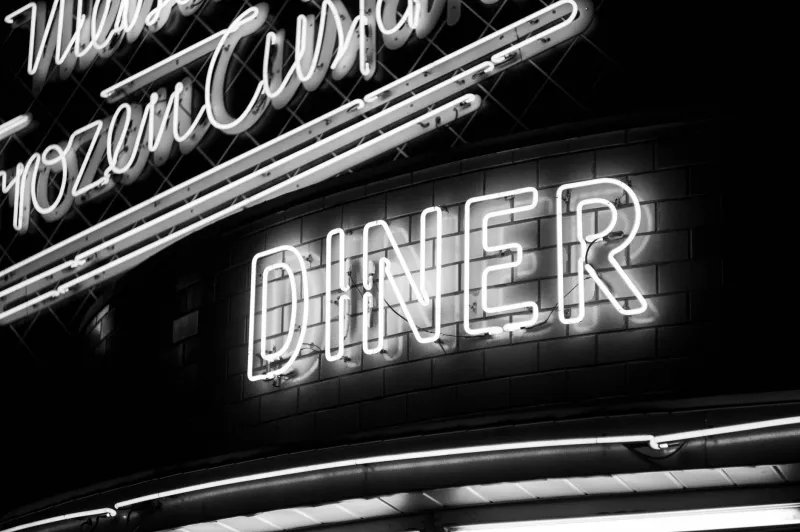
There is a particular quality of light that belongs to neon — warm, buzzing faintly at the edge of perception, casting its colored glow onto rain-slicked sidewalks and the upturned faces of passersby. It is a light that carries memory in its frequency. For millions of Americans, the sight of a restored mid-century neon sign is not merely decorative; it is an involuntary act of remembrance, a return to a streetscape that once felt permanent and now seems impossibly fragile.
Yet fragile is precisely what these artifacts have become. Across the country, the hand-crafted neon signs that once announced diners, ballrooms, motels, and pharmacies are disappearing at an alarming rate — victims of urban redevelopment, corporate rebranding, and the simple passage of time. What remains is increasingly the province of a small but fiercely devoted community of preservationists, museum curators, and independent craftspeople who have made it their mission to ensure that this luminous chapter of American commercial art is not extinguished entirely.
A Trade Built by Hand
To understand why neon signs occupy such a singular place in the American cultural imagination, one must first appreciate how they were made. Unlike modern LED displays, which are manufactured by machine in standardized configurations, vintage neon signs were fabricated entirely by hand. A skilled glass bender — known in the trade as a neon tube bender — would heat lengths of glass tubing over a ribbon burner, then shape each section by breath and touch alone, following a paper template laid flat on the workbench. The finished tubes were evacuated of air, filled with noble gases, and sealed with electrodes that, when energized, caused the gas to ionize and glow.
The result was a medium of extraordinary expressive range. Neon could render a script letterform with the same fluid grace as a calligrapher's pen. It could suggest the flicker of a cocktail glass, the rotation of a barber's pole, or the cascading shimmer of a waterfall — all through the ingenuity of a single craftsperson working at a bench no larger than a kitchen table. In its heyday, from roughly the 1920s through the 1960s, neon was the dominant visual language of American commercial life, and the men and women who fabricated these signs were, in every meaningful sense, public artists.
Museums as Sanctuaries of Light
Among the most significant institutions committed to preserving this legacy is the Museum of Neon Art in Los Angeles, California — an institution that has, since its founding in 1981, served as both sanctuary and advocate for the medium. MONA's collection spans hundreds of signs rescued from demolished storefronts, failed businesses, and roadside clearances across the American West. Walking its galleries is an experience unlike that of any conventional art museum: the works hum and glow, casting pools of colored light across the floor, demanding an almost physical engagement from the viewer.
What MONA and institutions like it argue, compellingly, is that these objects are not nostalgia props but primary documents of urban history. A neon sign for a family-owned Chinese restaurant in Chinatown, or a hand-lettered marquee for a Black-owned jazz club on a Southern main street, encodes within its very form the economic ambitions, aesthetic sensibilities, and cultural confidence of the communities that commissioned it. To discard such objects is to erase a form of testimony that no photograph can fully replicate.
Similar missions animate organizations such as the Young Electric Sign Company's archive in Salt Lake City and the extensive collection maintained by the Neon Museum in Las Vegas, where signs rescued from the Strip's demolished hotels are displayed in a two-acre outdoor gallery known as the Neon Boneyard. In each case, the curatorial argument is the same: these are not curiosities. They are artifacts.
Grassroots Guardians
Beyond the institutional world, preservation is also driven by a dispersed network of independent collectors and volunteer restoration societies whose work is less visible but no less vital. In cities from Cincinnati to Portland, small groups of enthusiasts have taken it upon themselves to document endangered signs through photography and archival research, negotiate with property owners facing demolition decisions, and — in some cases — physically remove and restore signs that would otherwise be lost.
The restoration process itself is painstaking. Glass sections that have cracked or lost their gas charge must be reprocessed by one of the diminishing number of craftspeople still trained in the original techniques. Transformers must be sourced, rewired, or rebuilt. Sheet-metal housings, often corroded by decades of weather, require fabrication work that combines the skills of a metalsmith with the historical sensitivity of a conservator. For many restorers, a single sign may represent hundreds of hours of labor spread across months.
What motivates such devotion? Those who practice it tend to speak in terms that resonate deeply with the broader mission of cultural preservation. The signs, they argue, are irreplaceable records of how a neighborhood understood itself — what it wished to project to the world, what it valued, what it celebrated. When a sign is lost, something specific and non-reproducible vanishes with it.
Civic Pride and the Streetscape
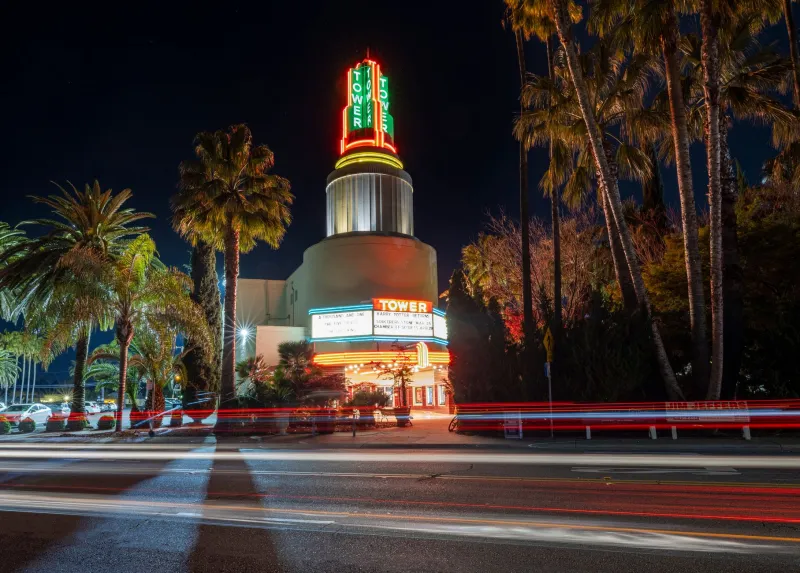
There is also a civic dimension to neon preservation that deserves acknowledgment. In numerous American cities, restored neon signs have become anchors of neighborhood identity and economic revitalization. The restoration of a historic sign above a reopened theater or a rehabilitated diner communicates to residents and visitors alike that a community regards its past as an asset rather than an obstacle.
This is, at its core, the argument that preservationists have long made about the built environment: that continuity of place carries genuine social value, that the material traces of previous generations are not merely sentimental but functional, serving as connective tissue between what a community has been and what it aspires to become.
Neon, with its particular capacity to animate a façade and draw the eye, makes that argument with unusual vividness. A glowing sign is not a static monument. It is a living presence on the streetscape, as insistent and welcoming in the twenty-first century as it was in the mid-twentieth. That continuity, for those who have dedicated themselves to its preservation, is precisely the point.
Keeping the Flame
The challenge ahead is not merely technical but generational. The number of craftspeople trained in traditional neon fabrication continues to decline, and the specialized knowledge required to restore antique signs — knowledge held in the hands and muscle memory of aging practitioners — is not easily transferred. Several vocational programs and individual masters have begun offering instruction, but demand for such training remains modest relative to the scale of what is at risk.
Preservation organizations, museum educators, and trade advocates are increasingly aware that saving the signs is only half the task. Saving the knowledge of how to care for them is equally urgent. Without that knowledge, the most beautifully rescued marquee becomes, in time, simply another object in slow decay.
For now, however, the light holds. In workshops across the country, craftspeople bend glass over open flames, coaxing it into the shapes of letters and figures that once defined a street corner, a neighborhood, a moment in American life. Their work is quiet, deliberate, and largely unheralded — the kind of labor that Silversides has always sought to honor. It is, in every sense, the work of keeping memory luminous.