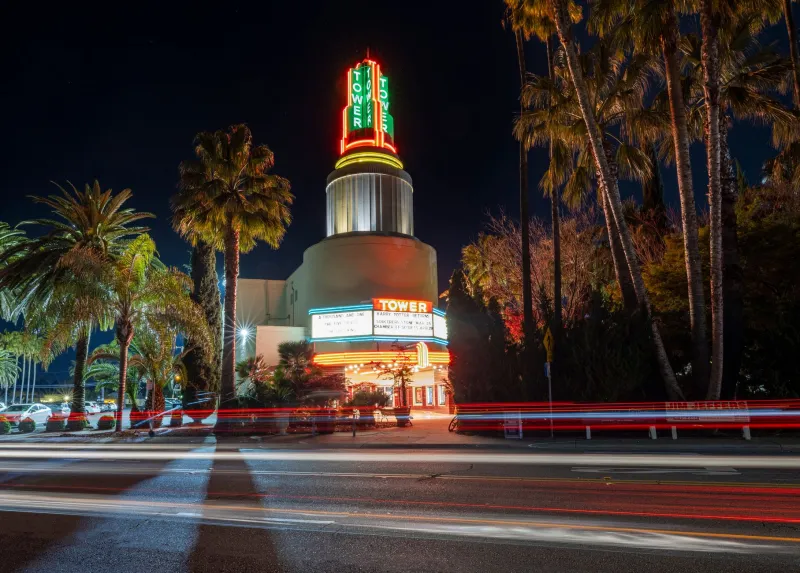
Gilded and Forgotten: How Small-Town America Is Bringing Its Grand Theaters Back to Life

There is a particular kind of grief that settles over a town when its theater goes dark. It is not the sharp grief of sudden loss, but something slower — the quiet ache of watching a beloved landmark surrender to time, one peeling plaster cherub at a time. For much of the latter half of the twentieth century, that grief became a familiar companion to communities across America, as the grand movie palaces that once anchored their downtowns fell into disuse, disrepair, and, in too many cases, demolition.
Yet something remarkable is stirring. From the Midwest to the Deep South, from New England mill towns to the high desert of the Southwest, those same communities are now fighting back — and winning.
The Architecture of Wonder
To understand what is at stake, one must first appreciate what these buildings actually were. The so-called "atmospheric" and "picture palace" theaters constructed between roughly 1915 and 1940 were not merely places to watch a film. They were, in the most literal sense, cathedrals of popular culture — designed by architects such as John Eberson, Thomas Lamb, and the prolific C. Howard Crane to transport working-class Americans into realms of fantasy and splendor they might otherwise never encounter.
Eberson, in particular, perfected the atmospheric theater concept: interiors designed to evoke Mediterranean courtyards, Moorish gardens, or Spanish mission plazas, complete with painted night skies on the ceiling, mechanical cloud projectors, and sculpted architectural details that bordered on the surreal. Patrons did not simply attend a movie; they entered another world entirely.
The Rialto Square Theatre in Joliet, Illinois — often called "the Jewel of Joliet" — stands as one of the finest surviving examples. Its lobby, modeled loosely on the Hall of Mirrors at Versailles, features a rotunda crowned by a dome of stained art glass and a chandelier of such extraordinary scale that it became a local legend in its own right. When the Rialto closed in 1976, it seemed destined for the wrecking ball. Instead, a coalition of local citizens incorporated a nonprofit, lobbied tirelessly for public funding, and ultimately restored the theater to full operational splendor. Today it hosts Broadway touring productions, concerts, and community galas — drawing visitors from across the region.
 Photo: Rialto Square Theatre, via i.ytimg.com
The Anatomy of a Restoration
The Rialto's story, while inspiring, is not unique. Across the country, similar campaigns have unfolded with striking consistency: a core group of devoted advocates, years of painstaking fundraising, the navigation of historic tax credits and federal preservation grants, and ultimately, a reopening that feels less like a ribbon-cutting than a resurrection.
In Anniston, Alabama, the restoration of the circa-1930 Calhoun Theatre required nearly a decade of effort by the Anniston Arts Alliance, which partnered with the Alabama Historical Commission and private donors to stabilize a structure that had suffered significant water damage and structural deterioration. The restored Calhoun now serves as a performing arts center for the surrounding Calhoun County region, offering programming that ranges from student recitals to professional touring acts.
 Photo: Calhoun Theatre, via goingplaces.malaysiaairlines.com
Similarly, the beautifully restored Artcraft Theatre in Franklin, Indiana — a 1922 gem that retains its original Wurlitzer organ — has become something of a pilgrimage site for theater enthusiasts nationwide. The Artcraft's programming philosophy is deliberately nostalgic: it screens classic films, hosts organ concerts, and maintains ticket prices low enough to remain genuinely accessible to the community that saved it.
 Photo: Artcraft Theatre, via justexplore.com
What unites these projects is not merely a love of architecture, but a conviction that the physical spaces in which communities gather shape the character of civic life itself. As one preservation advocate in Ohio put it, describing her town's century-old theater: "When that building was dark, the whole downtown felt like it was holding its breath."
The Economics of Memory
Skeptics of historic theater preservation often raise practical objections: these buildings are expensive to maintain, their acoustic and sight-line profiles were designed for a pre-widescreen era, and their operating costs can be daunting for nonprofit stewards operating on tight margins. These concerns are not without merit.
And yet the economic case for restoration has grown steadily stronger. The National Trust for Historic Preservation has documented repeatedly that rehabilitated historic theaters serve as powerful catalysts for downtown revitalization — drawing foot traffic to surrounding restaurants and shops, anchoring arts districts, and generating tourism revenue that extends well beyond ticket sales. Historic tax credits, available at both the federal and state level, have made the financial calculus of restoration increasingly favorable for investors and nonprofits alike.
The Paramount Theatre in Aurora, Illinois — restored in the 1970s and expanded in subsequent decades — now operates as one of the largest self-supporting performing arts centers in the United States, generating significant economic activity for its surrounding community. Its success has become a frequently cited model for smaller cities contemplating similar undertakings.
Reimagined, Not Merely Remembered
Perhaps the most encouraging development in the contemporary preservation movement is the willingness of restored theaters to evolve beyond nostalgia alone. The most successful rehabilitated palaces are not museums to a vanished era; they are living institutions that honor their history while embracing new audiences and new purposes.
Many restored theaters now serve as flexible community spaces — hosting film festivals celebrating local filmmakers, providing rehearsal facilities for community theater groups, offering their stages to high school graduation ceremonies, and partnering with libraries and historical societies to present public programming rooted in regional heritage.
In this sense, the fight to save America's movie palaces is inseparable from a broader conversation about what communities owe to their own histories — and what those histories, properly tended, can offer in return. A restored theater does not simply preserve the past. It creates the conditions under which a community can imagine its future.
The marquee lights, when they finally come back on, illuminate far more than a building. They illuminate a belief — stubbornly, beautifully held — that some things are worth saving.