Custodians of the Unwritten: The Small-Town Librarians Racing to Save America's Local Memory
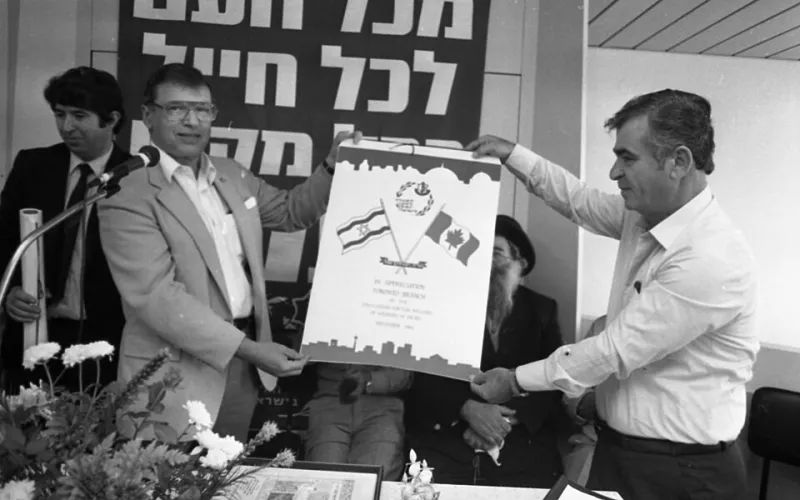
Photo: IPPA photographer, CC BY 4.0, via Wikimedia Commons
In a back room of the Harlan County Public Library in Harlan, Kentucky, there are boxes. Dozens of them—acid-eaten, water-stained, some sealed with tape that has long since surrendered its grip. Inside: church bulletins from the 1890s, land survey ledgers written in faded copperplate, photographs of coal miners whose names no living person can now confirm. The room smells of paper in the process of becoming dust.
Head librarian Donna Callahan has spent the better part of eleven years opening those boxes, one at a time.
"Most people don't understand that local history doesn't just exist somewhere," she says, pressing a cotton-gloved hand flat against a crumbling ledger page. "It exists because someone decided it was worth keeping. And right now, in a lot of places, that someone is us."
Across the United States, in libraries that receive no federal spotlight and precious little municipal funding, people like Callahan are engaged in one of the most consequential preservation efforts in American cultural life. They are not famous. They are not, in most cases, particularly well-compensated. But the work they do—cataloging, scanning, cross-referencing, and interpreting materials that would otherwise dissolve into illegibility—constitutes nothing less than the rescue of collective memory.
The Detective Work of the Archive
Local archival work is, at its core, detective work. A photograph arrives in a donation box, unlabeled. A ledger surfaces at an estate sale and finds its way to a reference desk. A folder of letters, tied with ribbon, is handed over by a family clearing out a grandmother's house. Each item arrives as a mystery, and the librarian must become an investigator.
In Abilene, Texas, archivist Marcus Treviño describes his process with the quiet precision of a man who has learned to find satisfaction in the incremental. "You might spend three weeks on a single photograph," he explains. "You're looking at the clothing, the architecture in the background, the photographic process itself. You cross-reference census records, newspaper archives, old city directories. And then one afternoon you find a name, and suddenly that face belongs to a person who had a life, a family, a story. That moment never gets old."
The materials these archivists encounter are staggeringly varied. Oral history recordings on deteriorating reel-to-reel tape. Hand-drawn maps of neighborhoods that no longer exist. Minutes from fraternal lodge meetings. Menus from vanished restaurants. Postcards, diaries, school rosters, theatrical programs. The texture of daily life, compressed into paper and emulsion.
What unites these materials is their fragility—and their irreplaceability. Unlike the holdings of major research libraries, local collections exist in single copies. There is no backup. When a document is lost, it is lost completely and permanently.
The Digitization Imperative
The most urgent front in local preservation is digitization. Scanning a document does not save the original, but it creates a version that can be shared, searched, and accessed by researchers who may never set foot in the physical library. For communities whose histories have been systematically overlooked by mainstream archives, this accessibility carries profound significance.
In Robeson County, North Carolina—home to the Lumbee Tribe, one of the largest indigenous nations in the eastern United States—librarian Priscilla Locklear has spent years digitizing materials that document tribal governance, cultural practices, and the community's long struggle for federal recognition. "There are researchers who've found things in our digital collection that changed their entire understanding of Lumbee history," she says. "But more importantly, young people from the community are finding their own history. That's what this is really for."
Funding remains the central obstacle. Most rural libraries operate on budgets that leave little room for archival-grade scanners, climate-controlled storage, or dedicated preservation staff. Grant programs through the Institute of Museum and Library Services have provided lifelines to some institutions, and state humanities councils have funded digitization projects in pockets across the country. But the need far outstrips the available resources.
"We do a lot with very little," says Callahan. "Some of what I've learned, I learned from YouTube tutorials at eleven o'clock at night. You figure it out because the alternative is watching history disappear."
The Emotional Weight of Stewardship
There is a dimension to this work that does not appear in grant applications or professional development curricula: the emotional gravity of being responsible for the memories of an entire community.
Librarians describe a particular feeling that settles over them when they open a box of old correspondence—letters written between spouses during wartime, between mothers and children separated by migration, between neighbors whose relationship to the land they shared is now entirely contained within those pages. The intimacy of the material is startling, and the responsibility it imposes is real.
"You hold something like that and you understand that you are the last person standing between it and oblivion," says Treviño. "That's not a burden I take lightly. But it's also a privilege that I don't think I'll ever fully be able to articulate."
For many librarians, the work becomes deeply personal. They develop relationships with the families whose histories they steward. They attend funerals and receive phone calls from distant relatives who have found their grandparents in a digitized photograph. They become, in the truest sense, the memory keepers of their communities.
What Is at Stake
The question of what is lost when local archives disappear is not merely academic. Local records document the lives of people who never made national headlines—the ordinary citizens, the laborers, the community organizers, the artists, the farmers, the shopkeepers whose collective experience constitutes the actual texture of American history. Without these records, history defaults to the stories of the powerful and the prominent. The rest vanishes.
In an era when so much of public life has migrated to digital platforms that are themselves impermanent—where social media posts disappear, where websites go dark, where platforms are acquired and shuttered—the question of what survives takes on new urgency. The small-town librarian scanning a handwritten deed from 1887 is performing an act of cultural resistance: insisting that this life, this place, this community mattered enough to be remembered.
"Every document I save is an argument," says Locklear. "An argument that this community existed, that it was complex and beautiful and worth knowing. I intend to keep making that argument for as long as I can."
The boxes in Harlan County are slowly being emptied, their contents scanned, described, and made available to anyone with an internet connection who wishes to understand what life looked like in a coal town at the turn of the last century. It is slow work. It will not be finished in Callahan's career, or perhaps in the careers of those who follow her.
But it continues. One page at a time, one name recovered, one face returned to history. The archive grows, and the silence recedes.