Needles and Narratives: The Quiet Power of American Quilts as Historical Record
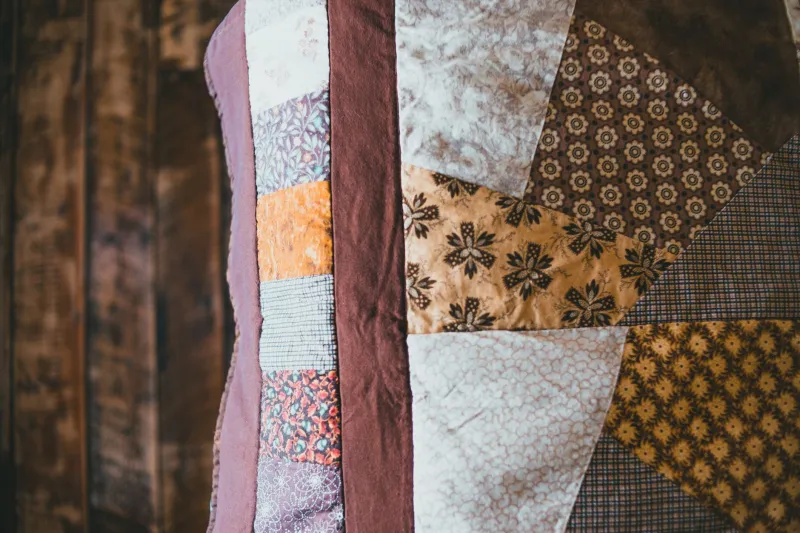
History, as it is conventionally understood, tends to arrive in certain familiar forms: the printed document, the official portrait, the engraved monument. It speaks in the voices of legislatures and commanders, and it is preserved in archives built of stone. But there is another history — one pieced together in cotton and silk, in indigo and madder, in the careful geometry of the nine-patch and the flying geese — that has been quietly accumulating for centuries in the homes and communities of ordinary Americans.
The American quilt is, at its most essential, a document. And it is long past time it was recognized as one.
A Domestic Art with Uncommon Ambitions
The habit of reading quilts as mere decorative objects — pleasant relics of a pre-industrial domesticity — has obscured the extraordinary complexity of what American quilters actually accomplished. From the earliest colonial period onward, the creation of a quilt was rarely a purely aesthetic act. It was an act of memory, of testimony, of community, and, on occasion, of outright defiance.
Consider the album quilts of Baltimore, Maryland, produced in extraordinary abundance during the 1840s and 1850s. These elaborate appliquéd textiles — featuring botanical motifs, architectural renderings, patriotic emblems, and personal inscriptions — functioned as communal autograph books, passed among friends and family members who each contributed a signed square before the whole was assembled and presented as a gift. They recorded social networks, documented friendships, and preserved, in thread and fabric, the texture of a particular community at a particular moment in time. Many surviving Baltimore album quilts now reside in museum collections, where conservators treat them with the same scholarly attention accorded to written correspondence.
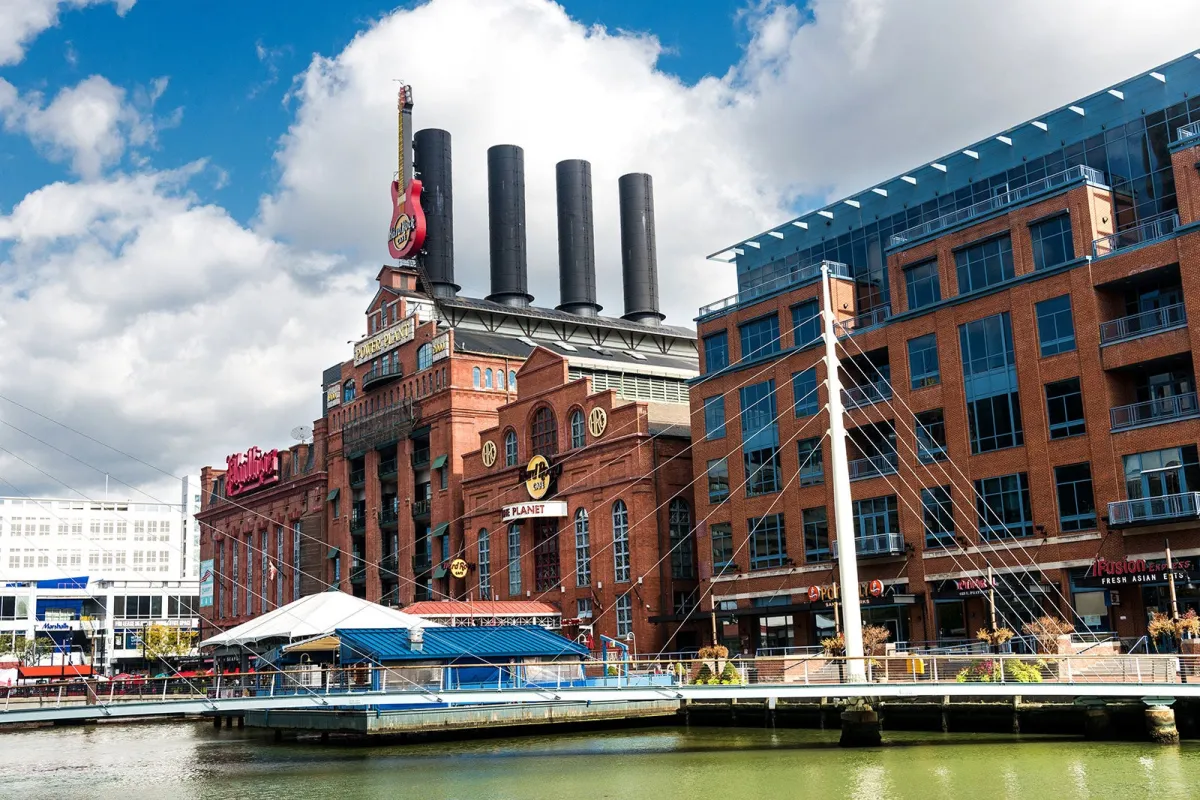 Photo: Baltimore, Maryland, via a.cdn-hotels.com
Further south and deeper into the mountains, Appalachian quilters developed the memory quilt tradition — incorporating fabric cut from the clothing of deceased family members into patchwork compositions that served as tangible memorials. These were not sentimental objects in any superficial sense. They were acts of grief made material, and they encoded biographical information — the worn wool of a grandfather's Sunday coat, the printed cotton of a daughter's school dress — that no cemetery record could replicate.
Resistance in Every Stitch
Some of the most politically charged chapters in American quilt history unfolded in the Hawaiian Islands. Following the 1893 overthrow of the Hawaiian monarchy and the subsequent annexation of Hawaii by the United States in 1898, Hawaiian women began producing what became known as flag quilts — textiles incorporating the design of the Hawaiian royal standard, which had been formally banned from public display by the new territorial government.
To stitch the flag was to refuse erasure. These quilts circulated quietly among families loyal to the deposed Queen Lili'uokalani, serving simultaneously as acts of mourning, cultural preservation, and political protest. They were folded into trunks and passed between households, their meaning understood by those who received them without a word needing to be spoken. As cultural artifacts, they document not merely a political crisis but a community's determination to carry its identity forward through the only medium available to it.
On the mainland, African American quilting traditions have attracted significant scholarly attention in recent decades, with researchers examining how quilts may have functioned within the networks of the Underground Railroad — whether as coded signal systems or simply as vital material comfort — and how the improvisational aesthetics of quilts produced in communities such as Gee's Bend, Alabama, reflect a creative tradition of remarkable sophistication and autonomy. The Gee's Bend quilts, when exhibited at the Whitney Museum of American Art in 2002, prompted art critics to reconsider the entire taxonomy by which American art history had been organized — and to acknowledge how much of that history had been systematically overlooked.
A Monument Measured in Panels
No discussion of the American quilt as historical document can omit the AIDS Memorial Quilt — known formally as the NAMES Project AIDS Memorial Quilt — which stands as perhaps the most ambitious act of collective memorialization in the nation's history.
 Photo: NAMES Project AIDS Memorial Quilt, via momdadsphere.com
Conceived in 1985 by San Francisco activist Cleve Jones and first displayed on the National Mall in Washington, D.C., in October 1987, the Quilt began as an act of grief and rapidly became something far larger: a living archive of a epidemic that the official apparatus of American public life had been catastrophically slow to acknowledge. Each three-by-six-foot panel, created by friends, lovers, and family members of those lost to AIDS, constitutes an individual biographical document — incorporating photographs, personal effects, handwritten messages, and objects of intimate significance. Taken together, the more than 50,000 panels now comprising the Quilt represent the largest community folk art project in the world.
The Quilt did what official records could not: it put human faces and human stories to statistics that had been allowed to remain abstract. It made private grief into public witness. And it forced a reckoning — in the halls of government, in newsrooms, in living rooms across the country — with the scale of a catastrophe that had been permitted to unfold in relative silence.
The Archivist's Needle
What the quilting traditions of American history share, across their considerable diversity of region, culture, and purpose, is a fundamental conviction that the materials of ordinary life — the scrap of fabric, the length of thread, the practiced hand — are sufficient instruments for the work of historical preservation.
This conviction deserves to be honored with the same seriousness we extend to the printed archive and the carved monument. The women — and they were overwhelmingly women — who produced these textiles were not working at the margins of American history. They were, in many cases, producing the only record of their communities that would survive. They were archivists working in the only medium fully available to them, and they were, by any honest measure, extraordinarily good at it.
To hold an antique quilt and to read it carefully — to trace the provenance of its fabrics, to decode the logic of its pattern, to consider the hands that moved through its construction — is to encounter American history in one of its most unguarded and authentic forms. It is history that was never meant to impress posterity. It was meant to remember, to comfort, to protest, and to endure.
On all four counts, it has.